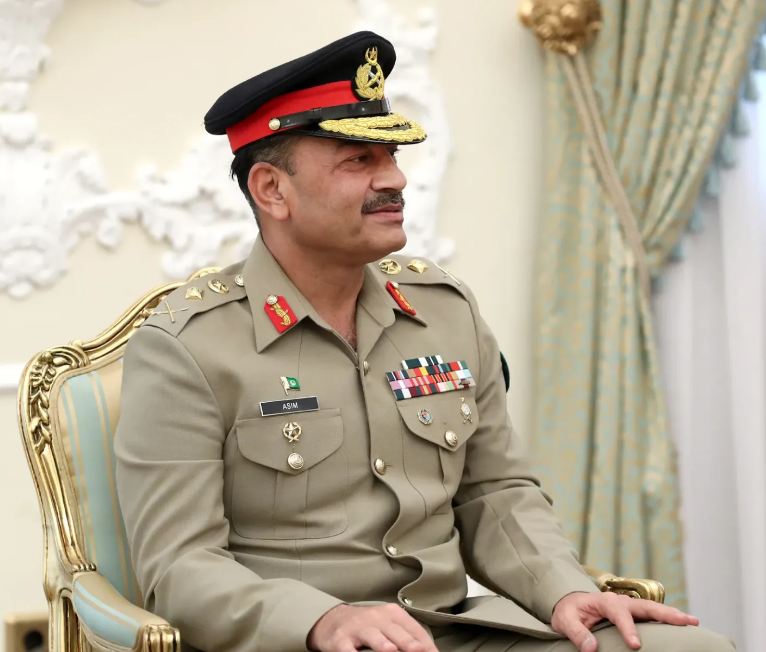
Chief of Army Staff and Chief of Defence Forces Field Marshal Asim Munir
A recent report by international media, which describes Pakistan’s Army Chief and Chief of Defence Forces, Field Marshal Asim Munir, as a prominent global figure, not only reflects recognition of Pakistan’s military leadership but also clearly highlights the country’s growing diplomatic significance. At a time when the world-particularly the Middle East-is facing severe tensions, fears of war, and an energy crisis, Pakistan’s responsible and balanced role is drawing the attention of the international community.
In a recent report, former U.S. President Donald Trump referring to Field Marshal Asim Munir as his “favorite field marshal” is not merely a ceremonial remark; rather, it reflects Pakistan’s recent diplomatic efforts and the growing global confidence in its military leadership. Similarly, Pakistan’s leadership, in coordination with Prime Minister Shehbaz Sharif, has played an active role in efforts to reduce tensions between Washington and Tehran. This is a positive development, indicating that Pakistan is emerging not just as a regional player but as an effective mediator on the global stage.
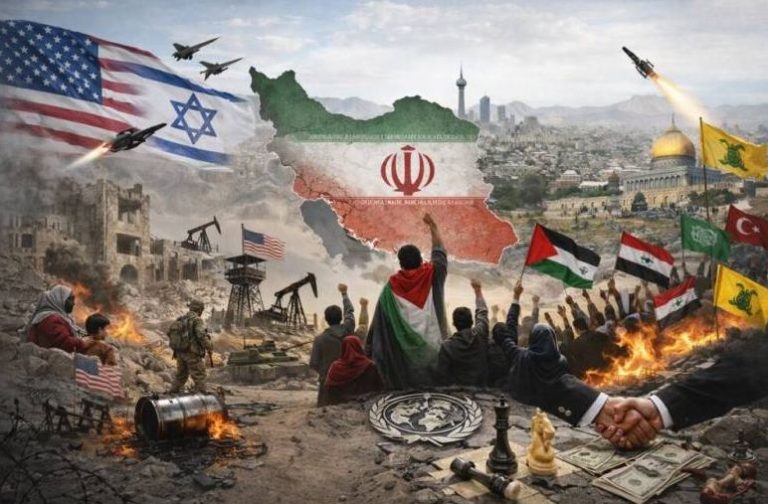
The world currently stands at a critical juncture, where escalating tensions between the United States, Iran, and Israel have engulfed not only the region but also the global economy. Fluctuating oil prices, disruptions in global supply chains, and an energy crisis have affected both developed and developing countries alike. In such circumstances, Pakistan’s efforts to promote peace and resolve conflicts through dialogue are of great importance.
Field Marshal Asim Munir’s military and intelligence background-including his leadership roles in the ISI and Military Intelligence-has presented him as a leader capable not only on the battlefield but also on the diplomatic front. Under his leadership, Pakistan has not only defended its national sovereignty but has also enhanced its international reputation. The appreciation of his leadership during recent tensions with India is another example of this continuity.
Furthermore, the King Abdulaziz Medal, First Class, awarded by Saudi Arabia, is evidence that Pakistan’s military and political leadership is held in high regard within the Muslim world. This honor is a matter of pride not just for an individual but for the entire nation, symbolizing that Pakistan is recognized as an important and reliable partner in the Islamic world.
However, along with this global recognition comes great responsibility. Playing a role in global politics is not merely an honor but an ongoing test that demands balance, wisdom, and the protection of national interests. Pakistan must continue to uphold its neutral and peace-oriented policy while playing a constructive role in regional and global conflicts.
It is also important to note that external successes cannot be sustained without internal stability. Therefore, both the government and military leadership must focus on political harmony, economic stability, and public welfare within the country, so that achievements at the global level are built on strong foundations.
Under the leadership of Field Marshal Asim Munir and Prime Minister Shehbaz Sharif, Pakistan appears to be entering a new diplomatic era-one in which it is not only safeguarding its own interests but also emerging as an effective voice for global peace and stability. – By Mahmood Iqbal
The Associated Press of Pakistan (APP), reports:
Chief of Army Staff (COAS) and Chief of Defence Forces (CDF) Field Marshal Syed Asim Munir has emerged as an unexpected yet central peace mediator in the US-Iran conflict.
The COAS traveled to Tehran, met the Iranian foreign minister, and led last-ditch efforts to revive stalled negotiations between the United States and Iran, according to APP citing a recent report by the British newspaper The Guardian.
The Guardian reported that Pakistan emerged as an unexpected diplomatic bridge, where Asim Munir helped build trust between the two leaderships through direct contacts, phone calls, and mediation. Oversight of negotiations from Rawalpindi, Munir’s role as a third party, and Prime Minister Shehbaz Sharif’s diplomatic visit to Saudi Arabia reflect Pakistan’s coordinated strategy, it added.
Without Asim Munir, this diplomatic process would not have been possible, remarked former Pakistan ambassador to the USA, Maleeha Lodhi.
She said that Field Marshal Asim Munir is the main driving force behind this process and that, without him, it would not have been possible, while the Foreign Office played a secondary role.
International affairs expert Mohammad Mehdi said it was a collective effort, with many individuals in both the government and the military playing key roles. While the Field Marshal has been at the forefront, it remains a collective effort, he added.
He said the success of these negotiations could be seen as a personal achievement for Field Marshal Asim Munir, while also positioning Pakistan’s influence as a credible diplomatic channel internationally.
“It is not appropriate to give full credit for the broad diplomatic campaign to any one individual,” said analyst Avinash Paliwal.
Furthermore, the restoration of relations with Iran, securing regional support, and expertise in personality-driven diplomacy have made Syed Asim Munir a reliable mediator, the newspaper said.
About The Author