By Dr Zerfishan Adnan
Education is often seen as the foundation of development, and this is particularly relevant for sustainable development. In a country like Pakistan, which grapples with various socio-economic, environmental, and educational challenges, the integration of Education for Sustainable Development (ESD) is not just important – it is essential. As Pakistan works towards achieving the United Nations Sustainable Development Goals (SDGs), especially SDG-4 (Quality Education) and SDG-13 (Climate Action), ESD is crucial in preparing a generation to tackle the complex issues of the 21st century.
What is Education for Sustainable Development (ESD)
Education for Sustainable Development (ESD) provides individuals with the knowledge, skills, values, and attitudes needed to contribute to a more sustainable future. It encourages critical thinking, problem-solving, and action-oriented learning, empowering people to address global challenges such as climate change, poverty, inequality, and the unsustainable use of resources.
UNESCO describes ESD as education that enables learners to make informed decisions and take responsible actions for environmental integrity, economic viability, and a just society, benefiting both present and future generations while honoring cultural diversity. ESD goes beyond traditional education models by promoting lifelong learning and the development of comprehensive competencies.
The current educational landscape in Pakistan
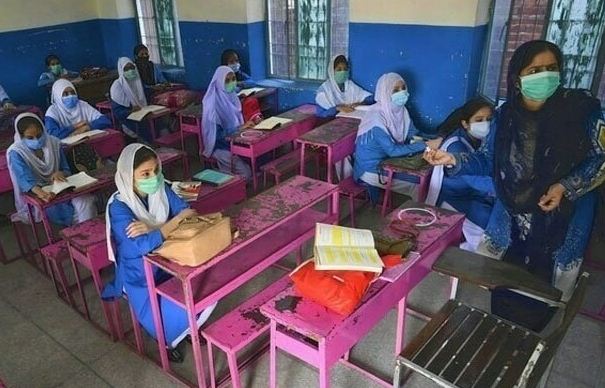
Pakistan is among the most vulnerable countries to climate change, facing frequent floods, droughts, and rising temperatures. However, the educational system in the country largely emphasizes rote learning and outdated curricula that do not incorporate essential knowledge about environmental stewardship, global citizenship, and sustainable development.
Although Pakistan has made strides in certain educational areas, such as improving the overall literacy rate, significant gaps remain. According to the Pakistan Bureau of Statistics around 32% of children remain out of school, with the majority of them being girls. Moreover, the education system’s emphasis on traditional subjects does not foster the critical thinking skills necessary for understanding and tackling global challenges.
ESD can transform the way education is approached by emphasizing both cognitive and practical skills that foster sustainability.
Why Pakistan need Education for Sustainable Development?
Climate vulnerability: Due to its geographical and climatic characteristics, Pakistan is particularly susceptible to environmental disasters. Issues like rising sea levels, glacial melting, deforestation, and increased carbon emissions necessitate a strong emphasis on climate education. ESD equips students with the knowledge and tools to engage in climate resilience initiatives, whether through renewable energy projects, sustainable farming, or eco-friendly urban development.
Sustainable economic growth: A significant segment of Pakistan’s population relies on agriculture, a sector increasingly impacted by unpredictable weather and resource depletion. Education that advocates for sustainable farming practices, efficient water management, and renewable energy can not only alleviate these challenges but also create new opportunities for economic advancement. Research indicates that ESD can assist communities in adopting innovative, environmentally sustainable practices that enhance livelihoods (Khalid & Bhatti, 2018).
Social equity and inclusion: Pakistan grapples with social inequalities tied to gender, income, and resource access. ESD prioritizes inclusivity, ensuring that marginalized groups acquire the skills necessary for social advancement. Additionally, by incorporating global citizenship concepts, ESD motivates learners to address social justice, human rights, and peace-building issues, which are vital for fostering cohesive and equitable societies (UNESCO, 2019).
Addressing the Plastic and Waste Crisis: Pakistan’s waste management infrastructure is lacking, resulting in millions of tons of plastic waste generated each year. Education for Sustainable Development can advocate for responsible consumption and promote the use of eco-friendly alternatives. Initiatives in schools, such as “Eco Bottle Innovators” and “Eco Tote Innovators,” have shown how students can play a role in reducing waste.
Meeting the SDGs: Pakistan is dedicated to achieving the Sustainable Development Goals (SDGs), particularly SDG-4, which emphasizes inclusive and equitable quality education for everyone, and SDG-13, which calls for urgent action to address climate change. By incorporating Education for Sustainable Development (ESD) into national curricula, Pakistan can work towards these goals by promoting environmental awareness and fostering a shared sense of responsibility for global issues.
Steps towards integrating ESD in Pakistan curriculum reform:
A significant challenge is the outdated curriculum that requires restructuring to include ESD elements. Core subjects at all educational levels should encompass environmental studies, climate change awareness, renewable energy education, and sustainable economic practices.
Teacher training: Educators are crucial in instilling sustainable development principles in their classrooms. There is an immediate need in Pakistan to train teachers to effectively deliver ESD content. Programs that emphasize critical thinking, problem-solving, and experiential learning can empower teachers to motivate students to adopt sustainable practices (Akhtar & Abbas, 2021).
Community engagement: Schools and educational institutions should serve as centers for sustainable development within their communities. Initiatives like “Green Warriors” and “Home Harvesters” have demonstrated success by encouraging students and their families to participate in tree-planting and home gardening projects that enhance food security and promote environmental conservation.
Public-Private Partnerships: To expand ESD initiatives, collaboration among public, private, and non-governmental organizations is vital. Governments should work alongside NGOs and the private sector to fund and implement ESD programs, especially in underserved areas of Pakistan (Khan & Hussain, 2017).
Technology integration: Technology is essential in contemporary education. Digital tools can enhance ESD by offering access to online resources, interactive simulations, and global learning opportunities. Incorporating technology into ESD efforts can enhance learning outcomes and extend the reach of sustainable development education to remote areas.
Conclusion:
Incorporating Education for Sustainable Development in Pakistan is not just a choice – it is a necessity for the future of the country. With the looming threats of climate change, environmental degradation, and social inequity, ESD provides the educational framework needed to empower young Pakistanis to become leaders in sustainability. By integrating ESD into national policies, curricula, and community programs, Pakistan can take significant strides toward a more equitable, sustainable, and resilient future.
About The Author
