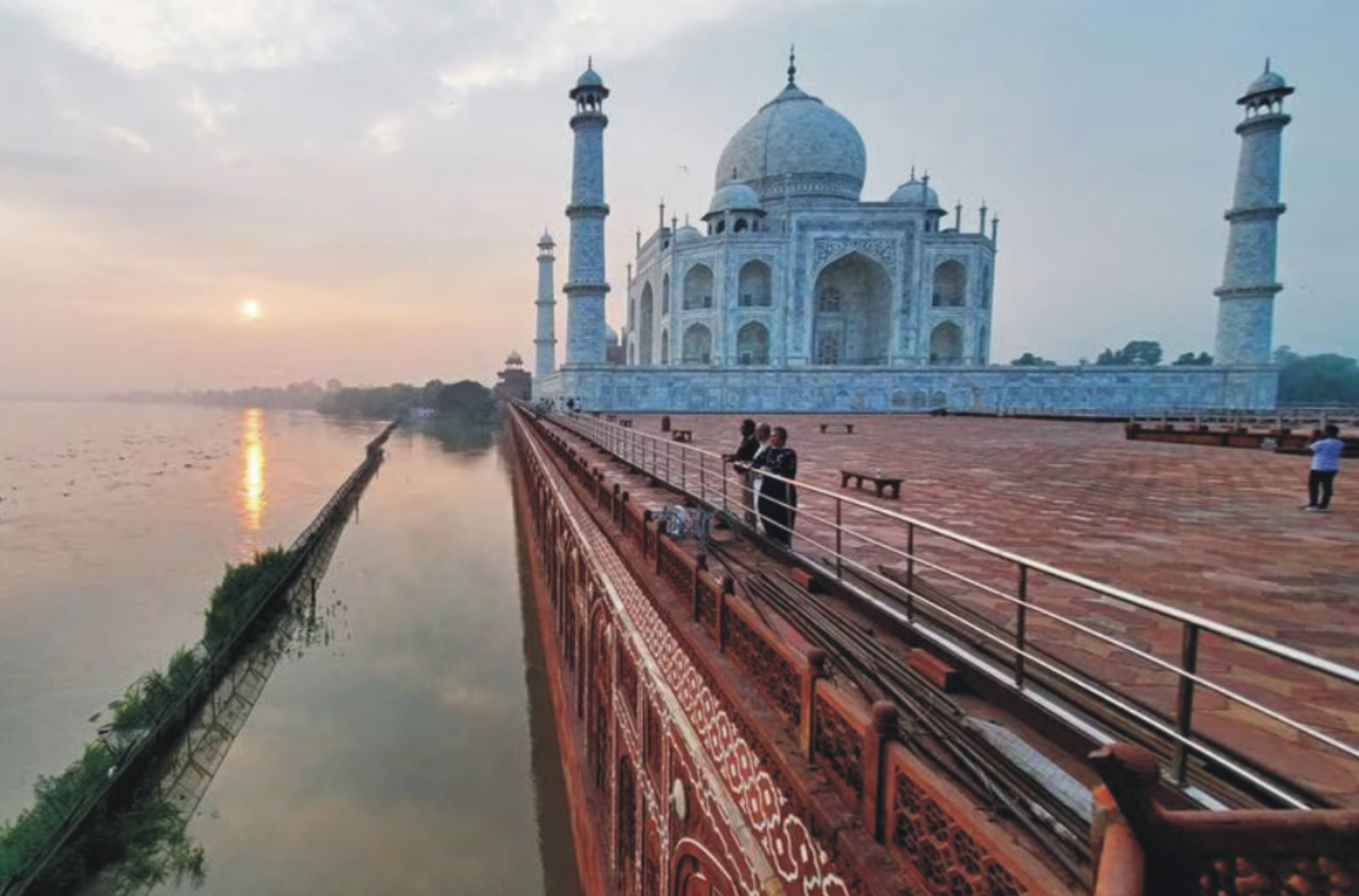
AGRA, India: Rising water from the Yamuna river has reached the walls of the Taj Mahal for the first time in 45 years and flooded an adjacent garden after monsoon rains in northern India swelled rivers across the region, according to the latest media reports on Tuesday.
The 17th century mausoleum in Agra, built by Mughal emperor Shah Jahan, is counted as one of the Seven New Wonders of the World and is built on the southern banks of the Yamuna river.
Due to incessant rain in northern India, the river rose above what is marked as the “low-flood level” of 150.8 metres on Monday.
The Archaeological Survey of India, which manages the historical monument, said water was yet to enter the basement, which holds the tombs of Shah Jahan and Mumtaaz Mahal.
But water had reached other historical monuments, such as the tomb of Itimad-ud-Daula – the grandfather of Mumtaaz Mahal.
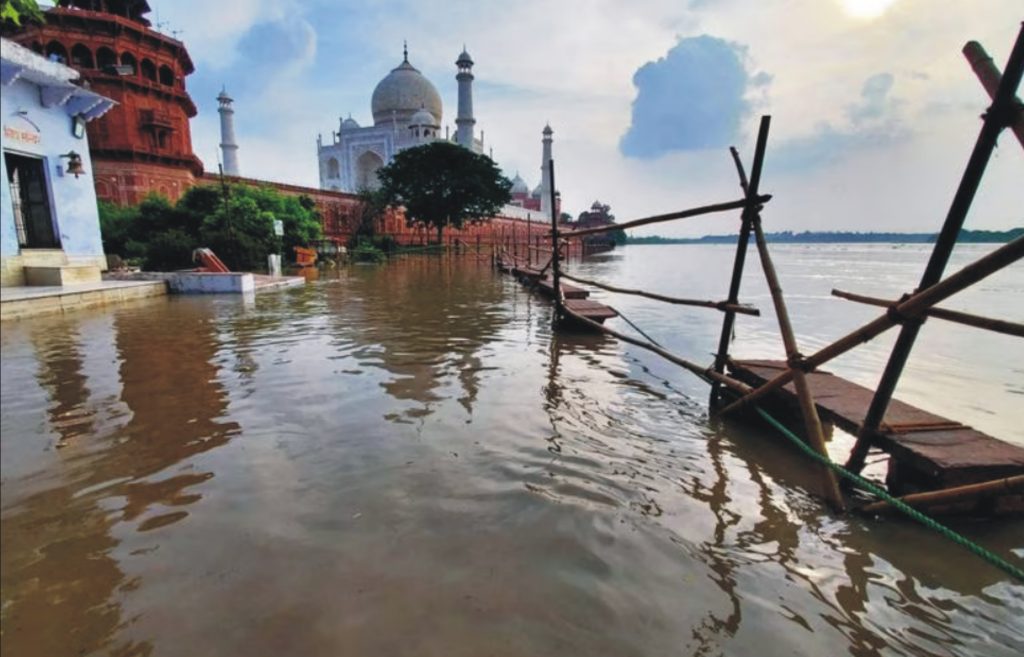
Officials said the mausoleum was designed to prevent water from entering the main monument.
“The Taj Mahal was developed in such a way that water cannot enter the main mausoleum even during high floods. The last time the Yamuna touched the back wall of the Taj Mahal was during high floods in 1978,” said Prince Vajpayee, conservation assistant at the ASI.
In 1978, the river’s water level reached 154.8 metres, flooding 22 rooms in the Taj Mahal’s basement, leaving behind silt. The ASI removed the wooden doors, through which the water entered, and erected walls at the entrance from the Basai and Dussehra ghats – the two famous embankments next to the monument. – News Agencies
About The Author