
The yuan is the new dollar as Russia rides to the redback
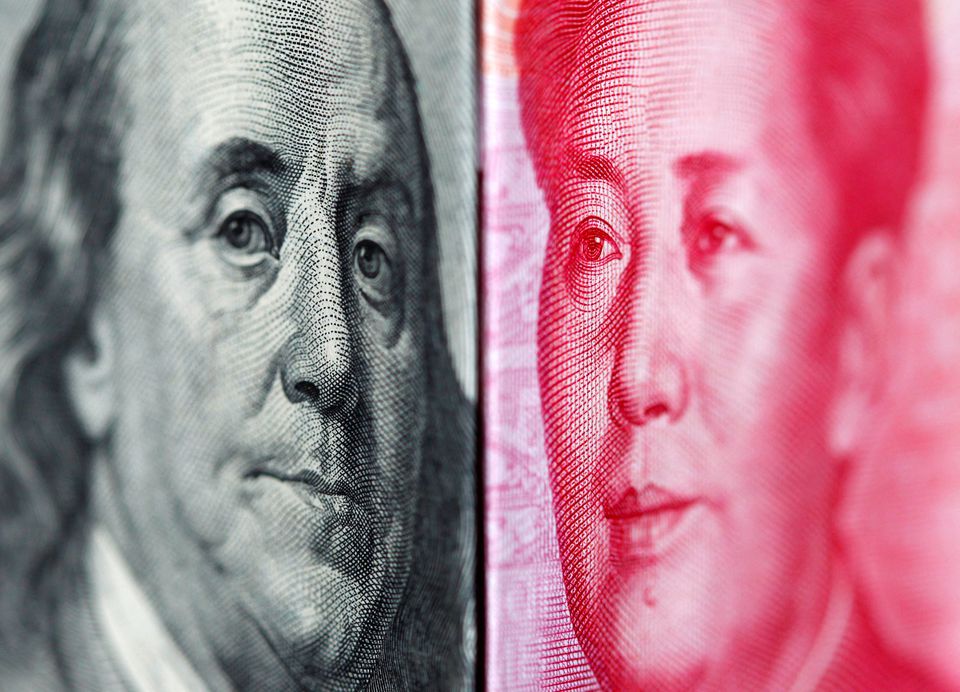
dollar-yuan pair
MOSCOW/SHANGHAI: Chinese entrepreneur Wang Min is delighted about Russia’s embrace of the yuan. His LED lights company can price contracts to Russian customers in yuan rather than dollars or euros, and they can pay him in yuan. It’s “win-win”, he says.
Wang’s plans have been transformed by the conflict in Ukraine and the subsequent Western sanctions on Moscow that have shut Russia’s banks and many of its companies out of the dollar and euro payment systems.
His contract manufacturing business with Russia has been small in the past, but now he’s preparing to invest in warehousing there.
“We hope that next year sales in Russia can account for 10-15% of our total sales,” said the businessman from China’s southern coastal province of Guangdong, whose annual revenue of about $20 million mainly comes from Africa and South America.
Wang is seeking to capitalise on a rapid “yuanisation” of Russia’s economy this year as the isolated country seeks financial security from Asian powerhouse China. He sees a win-win situation in Chinese exporters reducing their currency risks and payment becoming more convenient for Russian buyers.
Russia’s financial shift eastwards could boost cross-border commerce, present a growing economic counterweight to the dollar and limit Western efforts to pressure Moscow by economic means.
Total transactions in the yuan-rouble pair on the Moscow Exchange ballooned to an average of almost 9 billion yuan ($1.25 billion) a day last month, exchange data showed. Previously, they rarely exceeded 1 billion yuan in an entire week.
“What happened was that it became suddenly very risky and expensive to keep traditional currencies – dollar, euro, British pounds,” said Andrei Akopian, managing director of Moscow-based investment firm Caderus Capital, citing the potential danger of a bank that keeps foreign currency deposits being sanctioned.
The surge of interest has seen the yuan’s share of the currency market jump to 40-45% from less than 1% at the start of the year, said Dmitry Piskulov, international projects head at the Moscow Exchange’s foreign-exchange market department.
By comparison, the dollar/rouble pair, which commanded more than 80% of trading volumes on the Russian market in January, has seen its share drop to about 40% as of October, according to exchange data and the central bank.
Until April, Russia didn’t even make the top 15 list of countries using the yuan outside mainland China, in terms of the value of inbound and outbound flows, according to data from global financial networking system SWIFT.
It has since jumped to No. 4, lagging only Hong Kong, the city’s former colonial ruler Britain and Singapore.
To put this in a global context, though, the dollar and euro are still by far the dominant currencies, representing more than 42% and 35% of flows respectively as of September this year. The yuan has risen to almost 2.5% from below 2% two years earlier.
Wang’s business optimism is echoed by Shen Muhui, who heads a trade group for small exporters to Russia in neighbouring Fujian province. He said more and more Russian buyers were opening yuan accounts and settling transactions directly in the Chinese currency, which he said was a big advantage.
“The Russia-Ukraine conflict has brought opportunities for Chinese businessman,” said Shen, adding that his association had received many inquiries from Chinese companies interested in doing business in Russia.
It’s not only Chinese companies, or small companies, joining the yuan train.
While President Vladimir Putin has long sought to reduce Russia’s reliance on the dollar, geopolitics has turbo-charged this trend in 2022.
China, the world’s No. 2 economy, is the biggest global power not to join economic sanctions against Russia. Indeed, Putin and Chinese President Xi Jinping sealed a “no limits” partnership in February, weeks before Moscow launched what it describes as a “special military operation” in Ukraine.
The yuan comprised about 19% of Russia’s trade settlements with China in 2021 versus the dollar’s 49% share, Andrey Melnikov, deputy director at international cooperation department at the Russian central bank, said in September. While 2022 figures haven’t been published yet, the Chinese currency is gaining ground, according to Melnikov, who told a conference that demand for yuan liquidity had risen sharply due to reduced access to traditional payment methods and the freezing of its overseas gold and foreign exchange reserves. – Agencies / Web Desk


