
Solar Energy: A lifeline from high electricity bills – A boon for poor households and small businesses
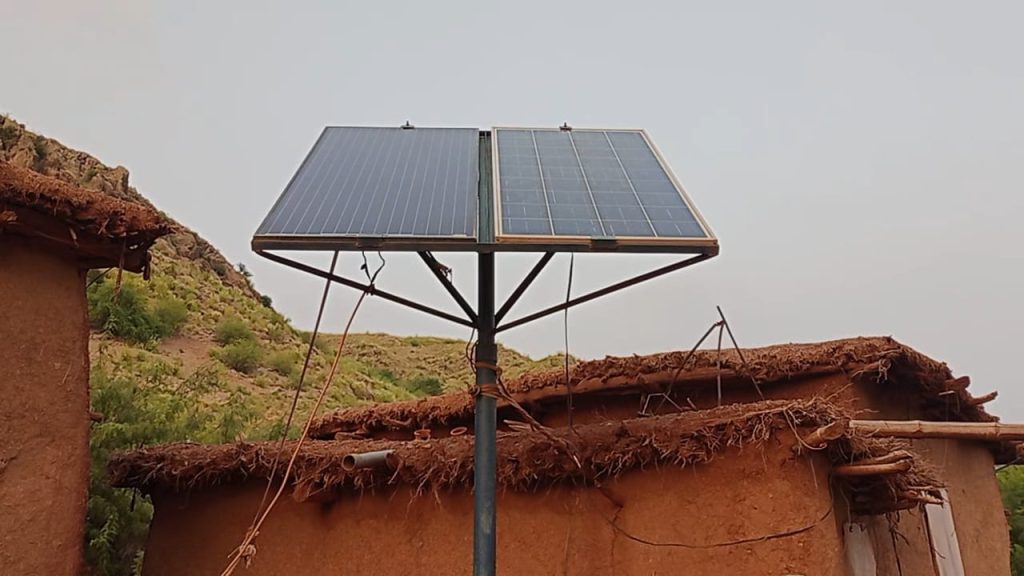
A solar panel is installed outside a house in the Cheechana Afghan reguee camp in Kohat.
By Khalid Khan
In the Cheechana area of Kohat, local villagers and Afghan refugees have started installing small-scale solar panels to escape the growing energy crisis and soaring electricity bills. This shift has significantly improved the lives of poor households.
Like other parts of the country, Kohat and remote areas of Khyber Pakhtunkhwa face frequent power outages, affecting both domestic life and small businesses, especially tailors and shopkeepers. However, solar energy has provided a game-changing solution.
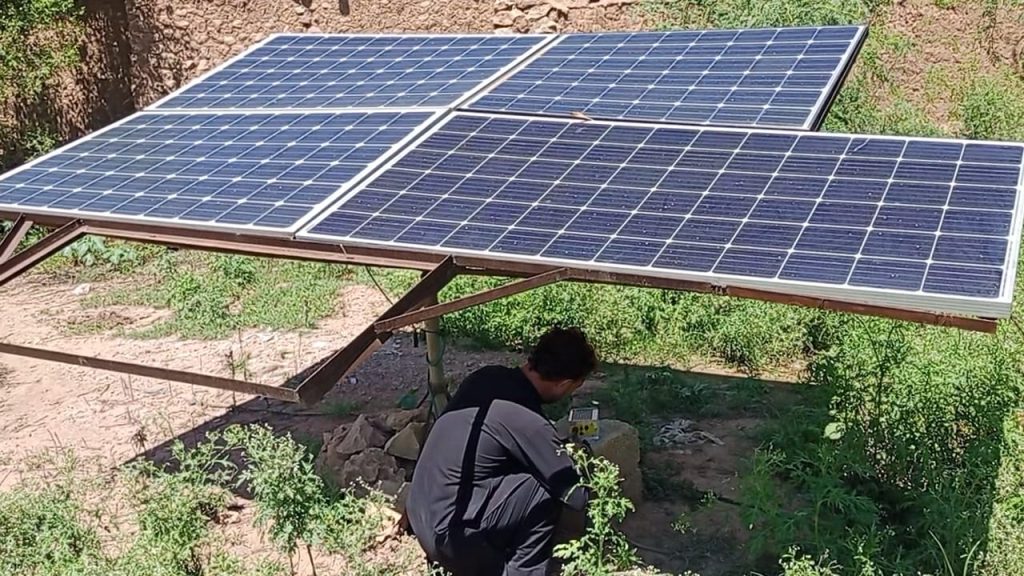
Cheechana, like many other areas, suffered from long, unpredictable power cuts, with ever-increasing electricity bills burdening poor households and stalling small businesses. Initially, a few locals installed one or two solar panels in their homes to reduce dependence on the unreliable power grid. Most of these early adopters were poor families, small shopkeepers, and tailors. The introduction of solar energy has boosted local business activities. Shops that once closed early due to lack of power now remain open late, thanks to solar-powered lighting.
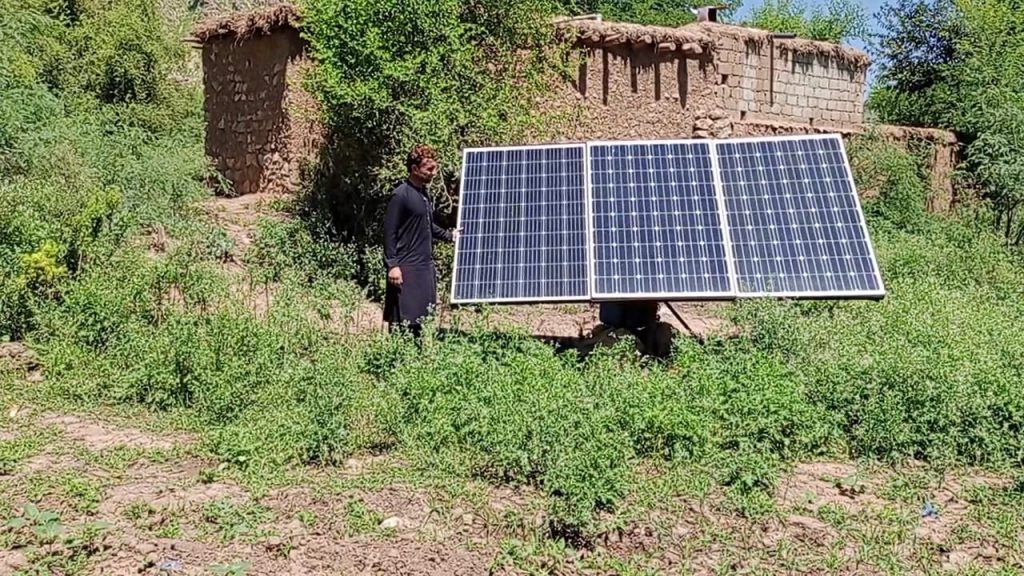
Solar energy has not only been economically beneficial but it has also contributed to reducing environmental pollution. Cheechana Camp, home to around 4,500 Afghan refugees, has been without government-supplied electricity for nearly a decade.
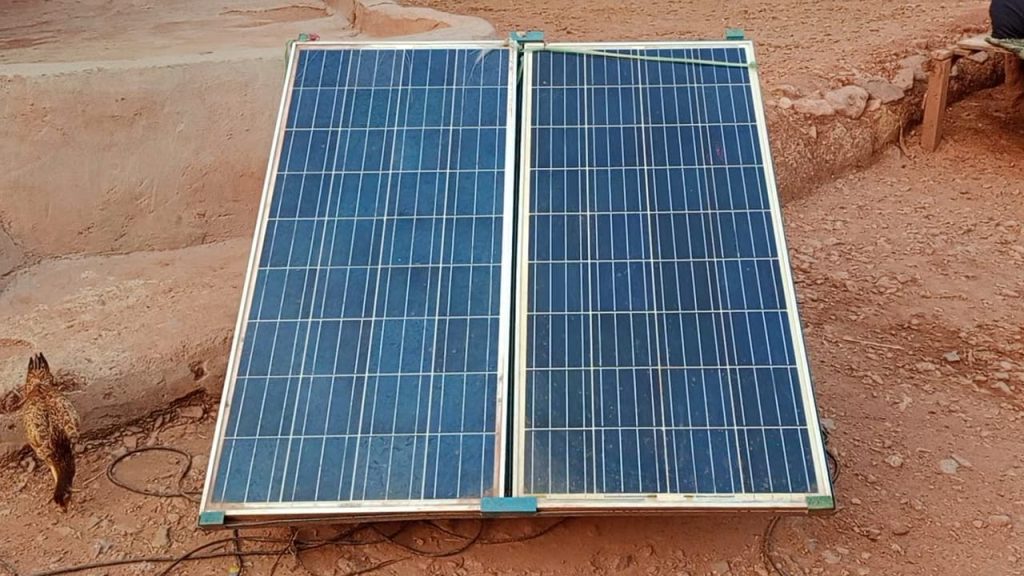
With the growing trend of solar energy, the refugee population also started installing one or two solar panels on their rooftops of their mud houses or in open areas to meet their power needs. At sunrise, they adjust their panels to face the sun, ensuring a steady electricity supply throughout the day.
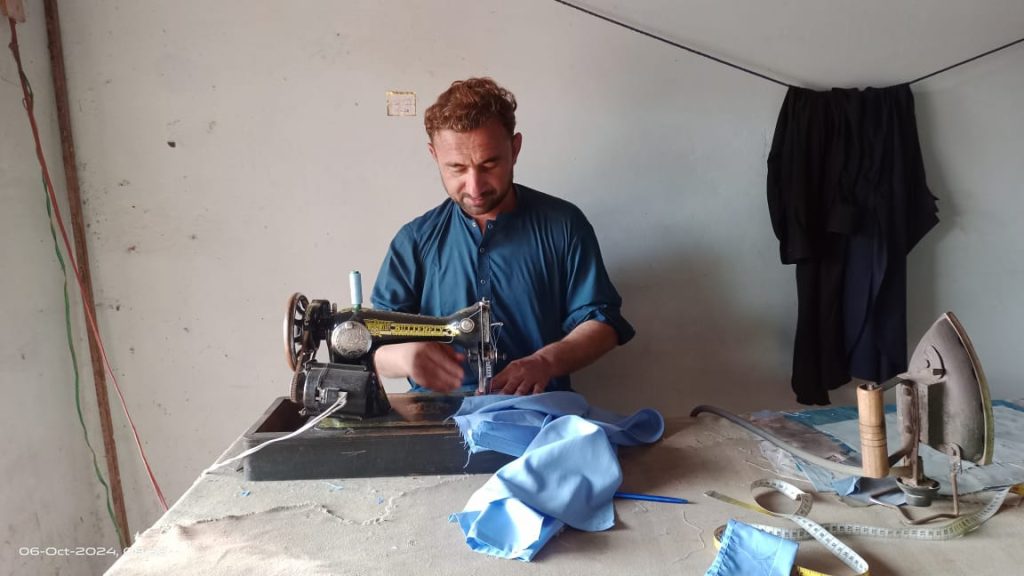
Kaleemullah, a 29-year-old tailor, has been using a solar panel at his shop for years, allowing him to work without worrying about power outages. After learning tailoring, he opened a shop in his village, borrowed some money, bought a solar panel, and began his business. Now, he works all day and can continue into the night under solar-powered lighting.
Similarly, Sharifullah, a private school teacher, says his household’s electricity needs are fully met through solar power.
Recognizing the situation, an NGO, Muslim Hands, distributed small solar panels, batteries, and fans to every household in the Cheechana Camp to ease the lives of the people.
Amid the ongoing global energy crisis and rising inflation, the government should take urgent steps to bring light into the lives of the poor by promoting solar energy.


