
Selection for women seats reinforces ‘political patriarchy’ in Khyber Pakhtunkhwa
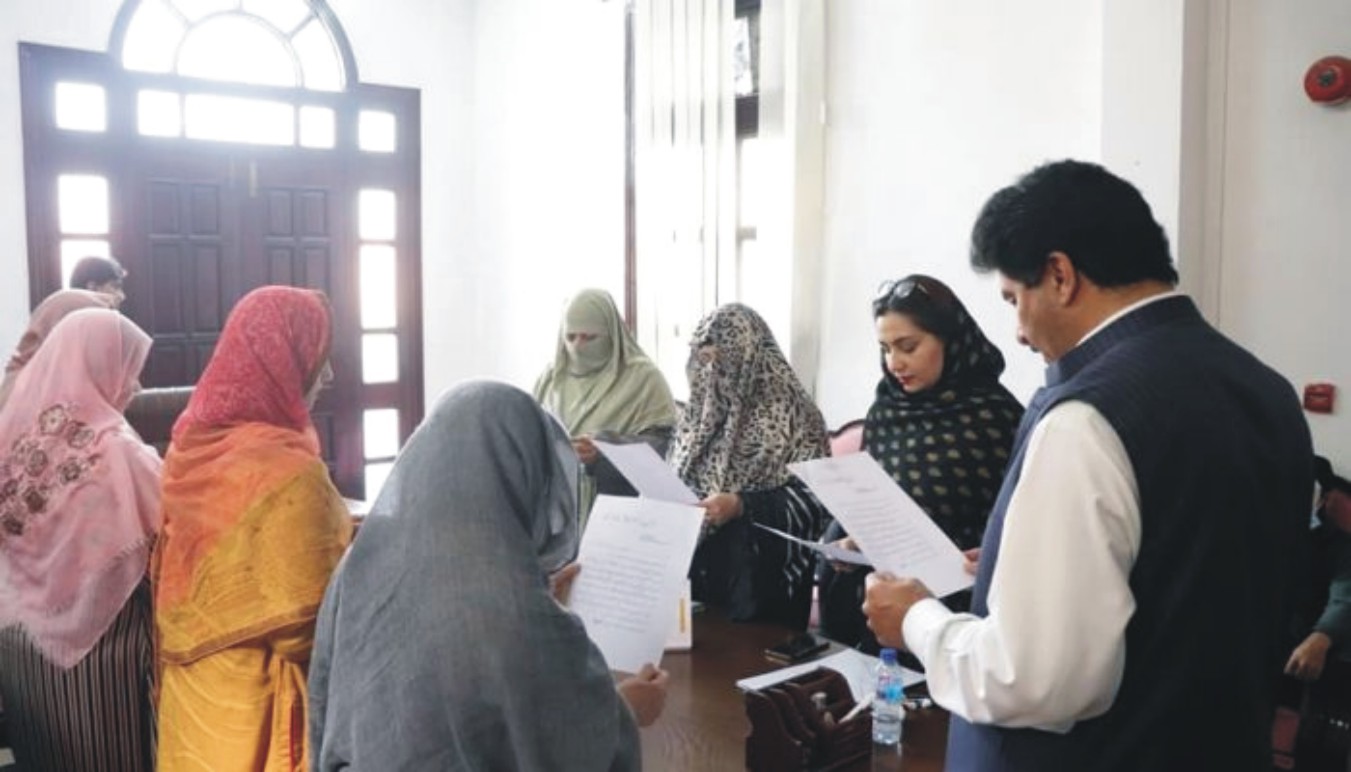
KP Parliamentary women caucus
By Raheela
PESHAWAR: Ahead of the Feb 8 general elections, political parties in KP have submitted priority lists for women candidates to the Election Commission, filling the 33% quota reserved for women. However, the selection process has faced criticism, with claims of nepotism and favoritism, as many women nominated for reserved seats are close relatives of top leaders.
This trend of favoring female relatives over genuine political workers by top leaders in almost all parties, particularly the Pakistan Tehreek-i-Insaf (PTI), undermines the intended purpose of promoting and mainstreaming women politicians, says Nagina Khatoon (name changed to protect her identity), whose name occurs at the bottom of her party’s priority list for the 2024 elections. This trend hinders women’s opportunities based on political merit rather than familial connections, she adds.
In Khyber Pakhtunkhwa (KP) province, women entering politics, or any other professional fields for that matter, often rely on familial support or connections, reinforcing a system shaped by male heads of families, both in the rural hinterland and in elite circles.
“The selection of women as candidates for reserved seats this time around and in the previous elections is like political patriarchy and the process smacks of nepotism, favoritism and violation of merit by party hierarchies across the board,” said a disgruntled woman leader, whose name like the previous general elections occurs at the bottom of her party’s priority list for the Khyber Pakhtunkhwa Assembly, requesting not to be named.
She retorted that these quota seats have become “charity seats” for close relatives of top leaders without taking into account the political struggle and acumen of senior women leaders.
Kalsoom Kundi, a leader of Pakistan Tehreek-i-Insaf, acknowledges the familial factors influencing the nomination of female politicians for the reserved seats. She admits that local arrangements among the party hierarchies influenced the quota for women’s representation.
PTI’s former Peshawar district president Zafarullah Khattak stated that the reserved seats for women have failed to serve their intended purpose for which the quota of women seats was restored by the Gen Pervez Musharraf region in 2022, due to the fact that top party leaders try only to nominate female relatives to reach the assemblies. “The selection of women for the reserved seats has totally undermined the objective of the quota seats which is to bring genuine political workers to mainstream politics,” he said.
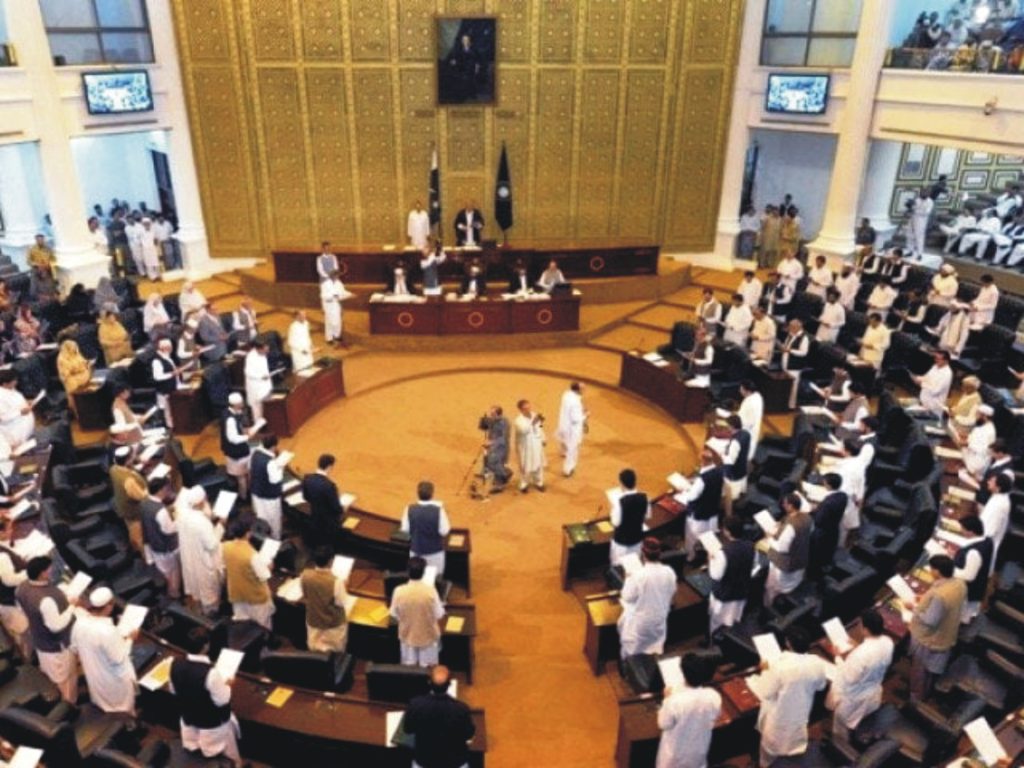
The National Assembly has 10 seats for women and 45 general seats from the KP province, while the 145-member KP Assembly has 26 seats for women and for four seats of non-Muslims.
The seats reserved for women are distributed among the political parties based on proportional representation in the respective assemblies.
“Backing from male politician relatives and the party’s hierarchies is an important contributor to their nomination to the top of the priority list, which further reinforces the perception of nepotism and favoritism,” said a former lawmaker on the condition of anonymity, because her name occurs at the bottom of the current priority list of her party.
In the 2013-2018 KP Assembly, with 22 seats reserved for women, the quota seats distributed on the basis of proportional representation mostly went to women relatives, like daughters, nieces, sisters-in-law and aunts, of top leaders, including the then ruling party PTI, and political dynasties. The house had women relatives of leaders of then ruling PTI, JUI (F), Awami Jamhoori Ittehad Pakistan (AJIP), which later merged with the Pakistan Tehreek-i-Insaf, and leaders of PTI, said Ms Khatoon.
Over time, there has been a characterization of these women as ‘proxies’ for their male relatives or party colleagues, who are unable to contest elections themselves, said a PPP aspirant for the reserved seats, requesting not to be named.
“Without tackling the relationship trend, we may continue to see barriers such as those faced by women legislators in KP as they unsuccessfully tried to pass a law against domestic violence during 2013–2018,” said a senior lawyer and human rights activist, Rafiq Khattak advocate.
KP Assembly website points to persisting exclusion of women lawmakers from powerful domains, such as standing committees, and the decision-making levels of their political parties, despite successful elections in 2008, 2013 and 2018.
The KP’s Women Parlia-mentary Caucus, a voluntary assembly-based body, was formed mainly with the aim to strengthen the voices of “ignored and sidelined” women elected on reserved seats, most of whom entered the assembly for the first time and lacked confidence to participate in the legislative business demand their rights.
“As we see that most women lawmakers of reserved seats are close relatives of top leaders and also newcomers, they lack political exposure and knowledge of issues. It becomes secondary for them to give their input in legislative processes to increase their political voice,” said Rafiq Khattak. While the reserved seats policy aims for gender equality, the perception of women as ‘proxies’ raises concerns about authentic representation. But, local arrangements among party leaders influence nomination of women for quota seats, impacting their role in electoral politics based on their political struggle.


