
Karak’s peanuts: A fusion of flavor, employment and economy
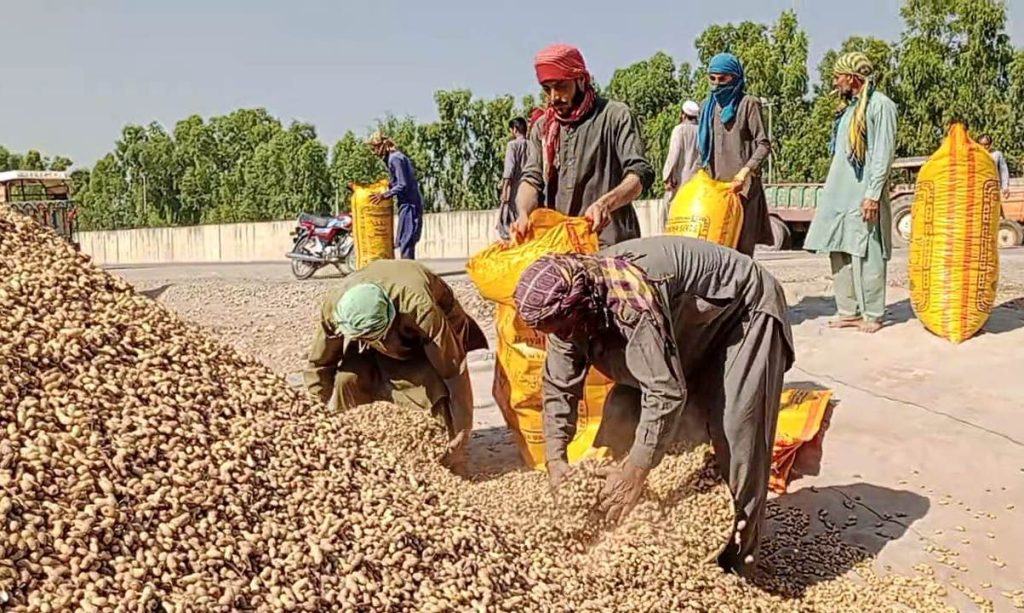
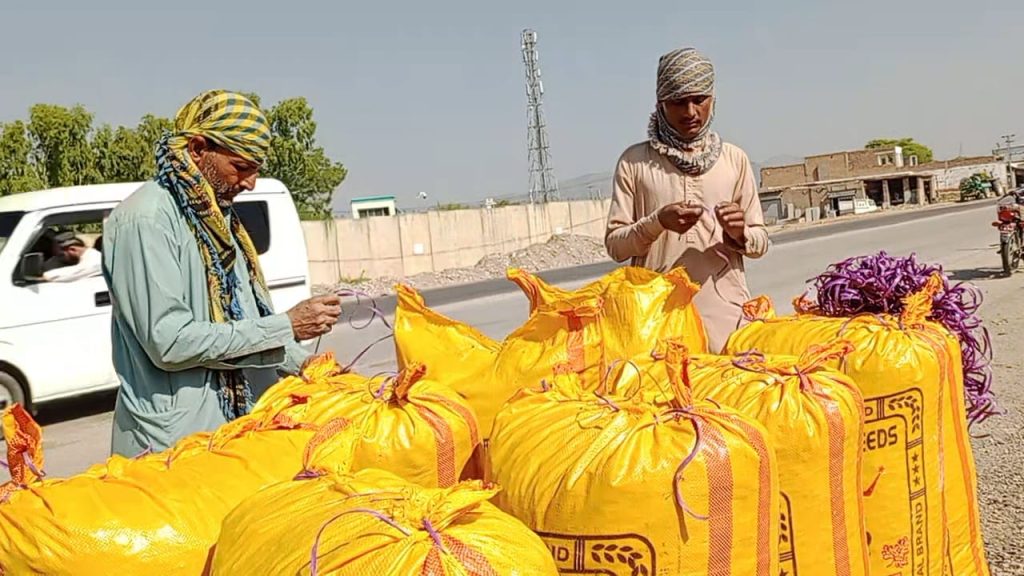
Laborers fill sacks with peanuts in Karak district's Banda Daud shah Tehsil.
Karak, a prominent district in the Khyber Pakhtunkhwa province, is widely recognized for its rich deposits of natural resources like oil and gas. However, for the farmers in this resource-rich but water scarce region, peanuts serve as another valuable resource. Not only are Karak’s peanuts renowned for their unique flavor, but they also provide employment to thousands of people.
In October and November, when the peanut crop is ready for harvest, farmers, especially women in groups, spend entire days pulling up peanut plants and separating the pods from the stems across various areas. Most farmers in Karak face a shortage of resources and do not have access to modern agricultural tools or opportunities for large-scale investments.
Additionally, a severe lack of water poses significant challenges for their farming efforts. Despite these hurdles, peanuts have become a crop that offers farmers financial stability in a short amount of time, requiring low costs, minimal labor, and thriving even with limited resources. Consequently, peanut cultivation has become a key source of livelihood for the local population.
The peanuts grown in Karak are sold not only in local markets but are also increasingly in demand nationwide. The land in Karak is primarily sandy, which is considered ideal for peanut cultivation. With minimal rainfall, people in rain-fed and sandy areas often grow crops that require less water. According to agricultural experts, warm and humid climates are suitable for peanut cultivation, and the ideal temperature at the time of sowing should be between 20 and 30 degrees Celsius.
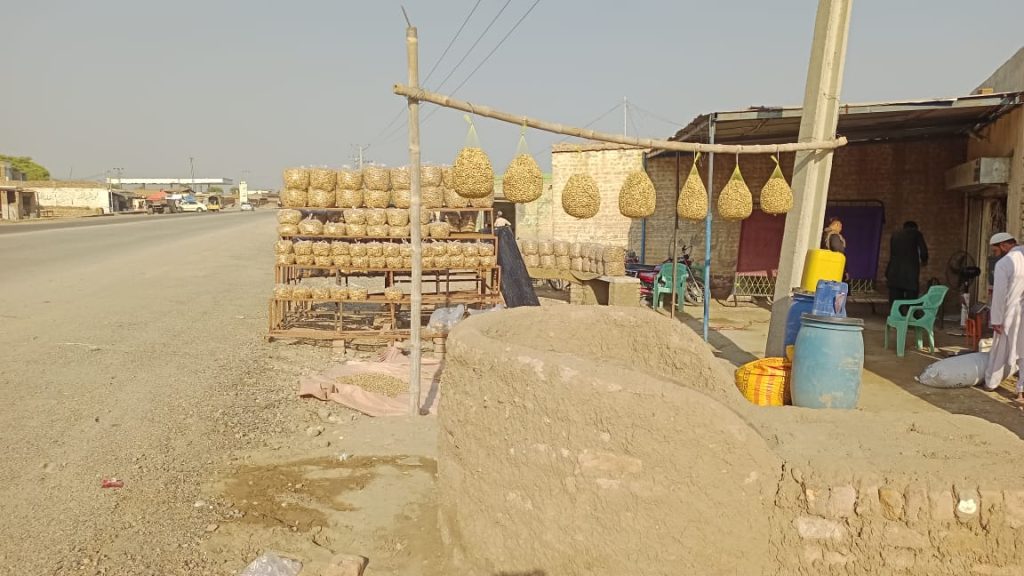
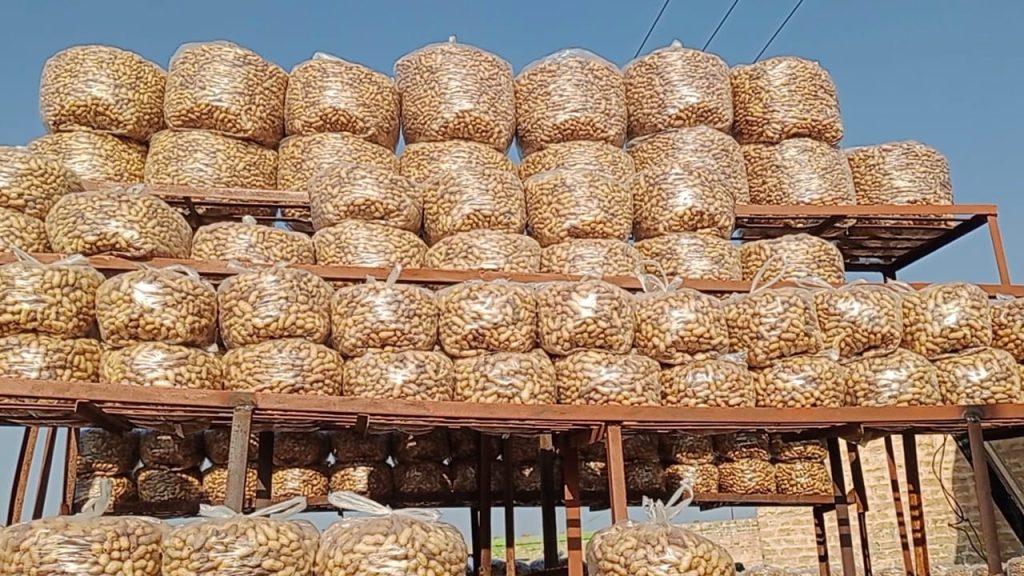
In Karak’s various regions, especially in Tehsil Banda Daud Shah, about 60% of the land is devoted to peanut farming. The livelihoods of poor and middle-class farmers depend heavily on agriculture and peanut cultivation. The village of Makoori in Banda Daud Shah serves as a key center for peanut trade, where vendors sell roasted and raw peanuts in plastic bags along the roadside. Traders from distant areas and other cities come to Karak to purchase these peanuts.
A global report states that in India, 70% of edible oil is derived from peanuts, while in Pakistan, the contribution of peanuts to edible oil production is negligible. Here, peanuts are mainly consumed roasted or used in bakery products.
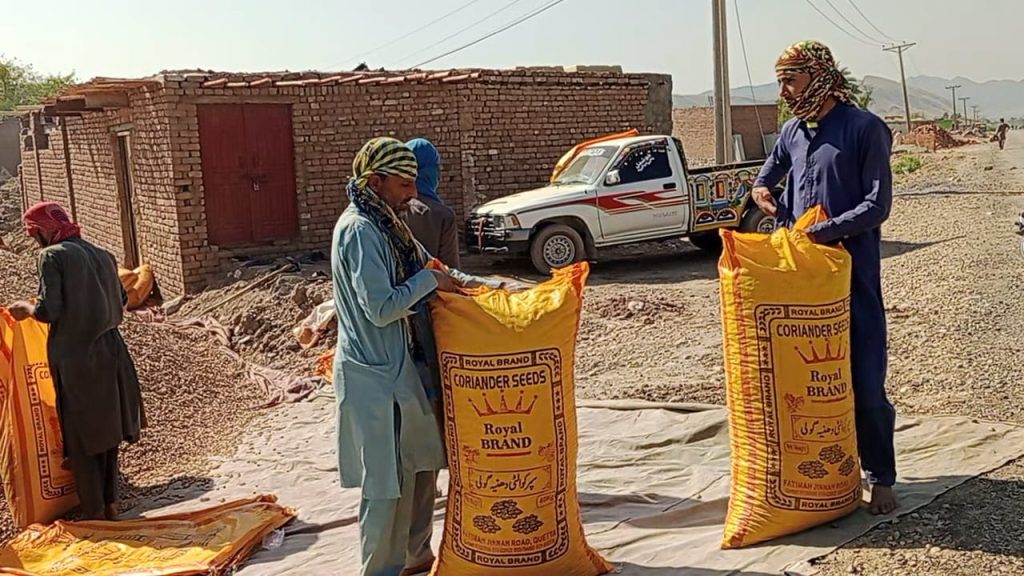
Fifty-year-old Farmanullah, a resident of Makoori village, shared that his entire family has been engaged in peanut farming and trade for decades. In a conversation with this correspondent, he explained that peanut cultivation typically begins in April, and the crop is ready for harvesting by October or November. According to him, people prefer peanut farming over other crops because it requires less water and is easier to manage. This year, timely rains have resulted in a good peanut crop.
Farmanullah mentioned that as winter approaches and the new peanut crop is ready, traders from other areas of Khyber Pakhtunkhwa and other cities flock to Karak. In addition to local farmers, a large number of laborers from other areas also arrive in Karak for work.
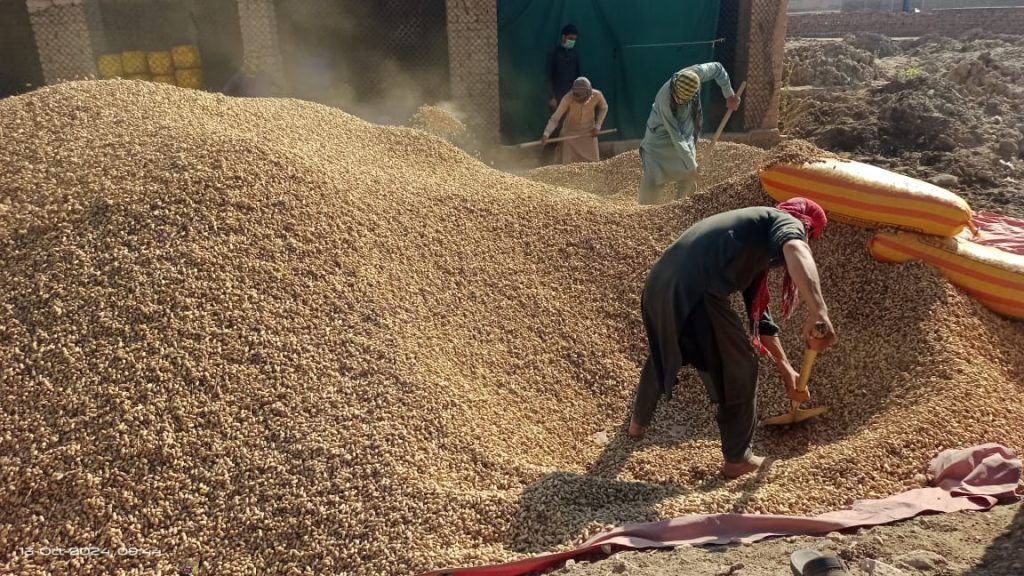
The transportation of peanuts to other parts of the country provides good employment opportunities for truck drivers and freight vehicle operators. Farmanullah noted that this year, the price of peanuts ranges between Rs. 13,000 to Rs. 17,000 per 40 kilograms. He believes that if the government focuses on this valuable crop, it could significantly improve the standard of living for Karak’s farmers. According to experts, promoting peanut cultivation in Karak further requires the government to introduce modern agricultural techniques and provide financial support to farmers.
Written and photographed by: Khalid Khan


