
Climate change and pesticide use pose severe threats to honeybee populations
Written and photographed by: Khalid Khan
KOHAT: Like other parts of the world, rapid climate changes and increasing pesticide use on crops in Pakistan are negatively impacting honeybee populations, leading to a steady decline in honey production.
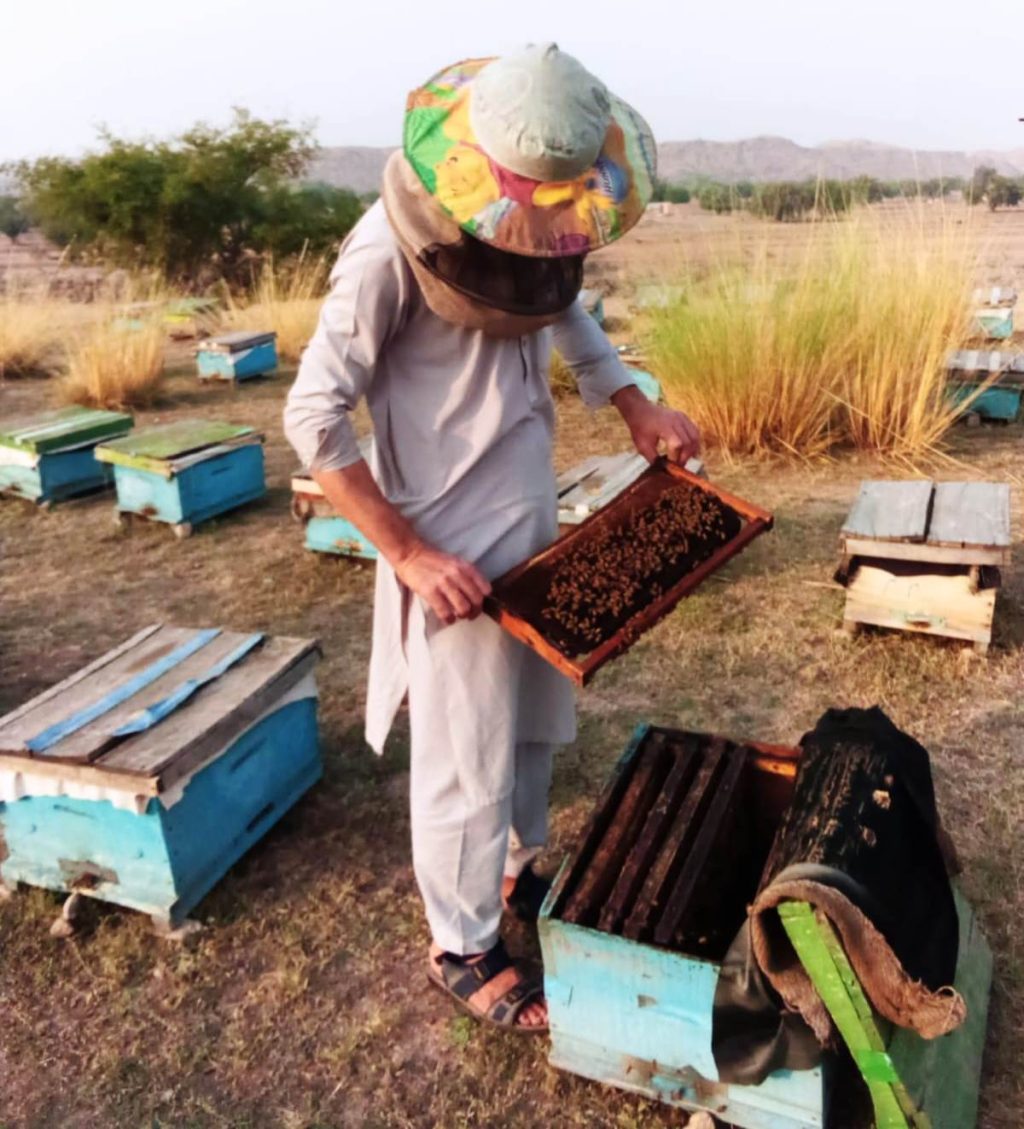
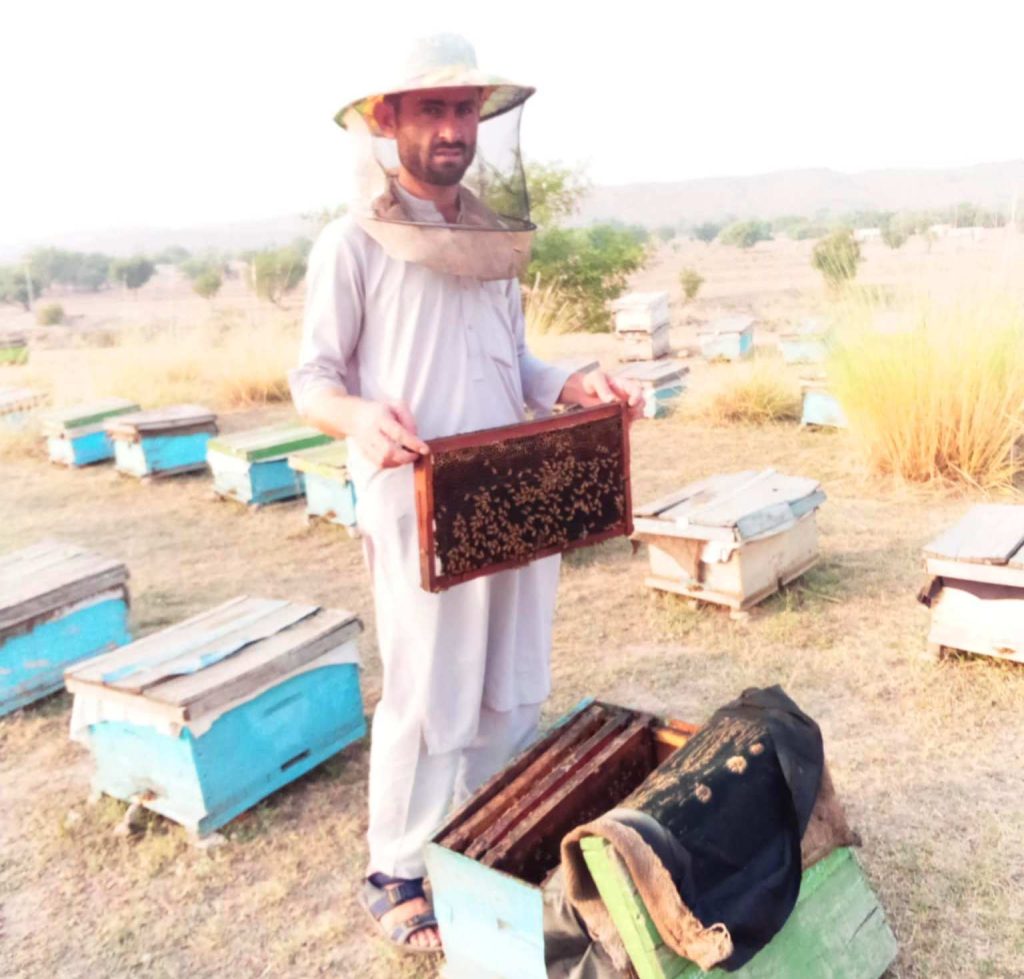
Understanding the gravity of the situation, Samiullah, 30, who tends to his bees as if they were infants, has grown concerned about their future. Samiullah’s family has been involved in the honey business for decades. After completing his education up to high school, Samiullah began working on his elder brother’s beekeeping farm near the Chichana Afghan Refugee Camp, located a short distance from Kohat city.
Their farm houses 170 specially crafted wooden boxes, which they transport from one location to another depending on the season. Recently, they have set up the farm in Bahadur Khel village in Karak district, where the berry trees are currently in bloom. In the summer, he usually moves the bees to cooler areas, such as Swat and other northern regions, while in the winter or during the berry tree blooming season, they move the farm to the plains of Kohat and Karak. According to Samiullah, it takes at least one to three years to learn the intricacies of beekeeping.
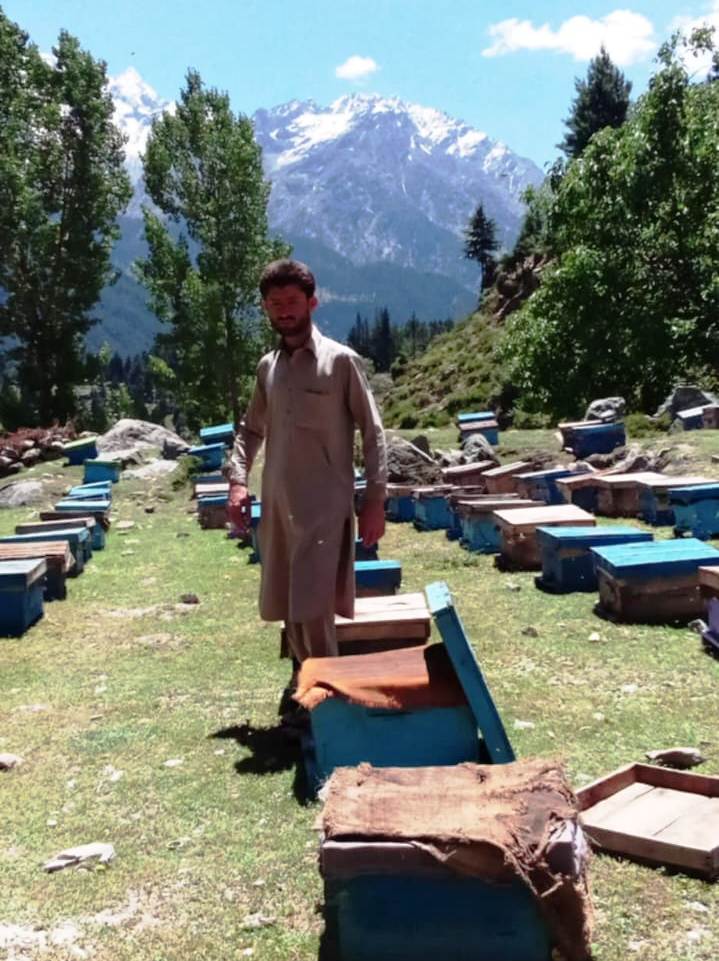
He explained that if there are no heavy rains or storms in a season, they can make a substantial income. During the first harvest this year, he extracted 14 maund (50 kg per maund) of honey from 170 boxes and 18 maund in the second harvest. The market rate for berry honey ranges from Rs 60,000 to Rs 80,000 per maund, while the second harvest, known for its pure berry honey, can fetch between Rs 80,000 to Rs 100,000 or more.
He also mentioned that April is the season for palosa trees, and as October begins, the berry honey harvest kicks off, lasting until the middle of the month. In comparison to berry honey, palosa honey is less expensive, as bees are often fed sugar during this season. The current price for palosa honey is around PKR 25,000 per man.
Discussing challenges and inflation, Samiullah highlighted the high costs involved in relocating the bees from one place to another. The rental cost for moving from Kohat to Kalam, Swat, which used to be Rs 18,000, has now increased to approximately Rs 50,000. Furthermore, the price of sugar, which is an essential food for the bees, is rising daily.
According to Samiullah, two main factors are causing significant harm to honeybee populations: the rampant felling of berry trees and the abnormal rainfall due to climate change. Additionally, the increasing use of pesticides on crops poses a severe threat to bee survival. Previously, the berry honey season lasted from mid-August to mid-October, but due to shifting climate patterns and temperature changes, the season has now narrowed to mid-September to mid-October.
Regarding major honey markets, Samiullah shared that the Tarnab Farm area on GT Road in Peshawar is considered a large honey marketplace. He either sells his honey to local merchants or takes it to Tarnab Farm, from where it is distributed to other parts of the country and even exported internationally. In the Chichana camp, others like Samiullah have also set up beekeeping farms. With government and commercial support, many more people could gain employment in this field. Furthermore, authorities and environmental organizations should take action to curb the illegal and uncontrolled felling of berry trees.


