
A thirsty settlement – In Peshawar’s Tajabad, clean water is searched like a hidden treasure
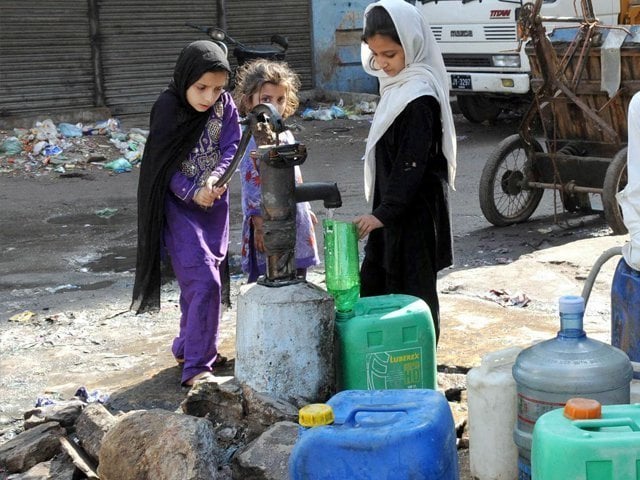
Children collect water at a community tap in Tajabad locality of Peshawar.
Report & Photos by: Gul Naaz
On the outskirts of Peshawar lies Tajabad, a sprawling settlement where mud houses, dirt streets, choked drains and the shadows of poverty blend into one another. This locality is home to thousands of Afghan refugees, who have been struggling for decades to meet the most basic necessities of life. Here, not only are job and healthcare pressing issues, but the biggest challenge is the scarcity of clean drinking water.
Water – the very symbol of life – is sought here like a rare treasure. Among the dusty lanes of Tajabad lives Marwa, a ten-year-old girl, who sets out every morning with her small plastic bottle and a few friends her age, in search of water. Unlike other children her age, she does not carry books or a schoolbag, but an empty canister or bottle, which she must fill with water after walking several kilometers on foot.
Marwa’s father, Mansoor, a vegetable seller in Peshawar’s well-known Board Bazaar, says, “Life here is difficult. When one problem is solved, another immediately takes its place. But the biggest trial is the lack of water. Every morning begins with the search for water – women, children, the elderly – everyone leaves their homes to bring water for household needs, and this struggle continues until evening.”

Most homes in Tajabad have no permanent source of water. Residents either fetch it from faraway streets or wait for hours at a community tap. The water available in Tajabad and similar suburban areas of Peshawar is often contaminated, resulting in widespread stomach, skin, and respiratory illnesses.
Mansoor says that he and other residents have repeatedly appealed to local elders and community leaders to install hand pumps, wells, or filtration plants in the area so that the issue could be resolved permanently – but every time, they receive nothing but hollow promises.
According to Mansoor, the water shortage in places like Tajabad has affected not only people’s health but also their education.
“When children spend hours every day fetching water, they’re left with neither the energy nor the time to study.”
Mansoor recounts sorrowfully that in 2024, the residents of Tajabad contacted a non-governmental organization (NGO), hoping their water crisis might finally be resolved – but even after a year, nothing has changed.

This situation is not limited to Tajabad. Every village and refugee settlement on the outskirts of Peshawar is plagued by water scarcity and other hardships. Government institutions often ignore these issues, citing a lack of funds.
It is an undeniable fact that water is a basic necessity of life – without it, there can be no health, cleanliness, education, or progress. Social experts emphasize that access to clean water is not a luxury, but a fundamental human right. When a society’s children are forced to fetch water instead of going to school, it reflects not just poverty, but the failure of social and government systems.
Marwa’s father Mansoor says: “We are not asking the government for personal favors – only for the right to live. We don’t want our future generations to grow up under the shadow of thirst.”
Like little Marwa, dozens of boys and girls start their mornings not by going to school, but by stepping into the alleys with water containers in their hands. Their faces are covered in dust, yet their eyes still shine with hope and dreams. The muddy lanes of Tajabad stand as silent witnesses, where little girls like Marwa chase after the blessing of water every single day – their tiny footsteps echoing a community’s enduring struggle for life.


