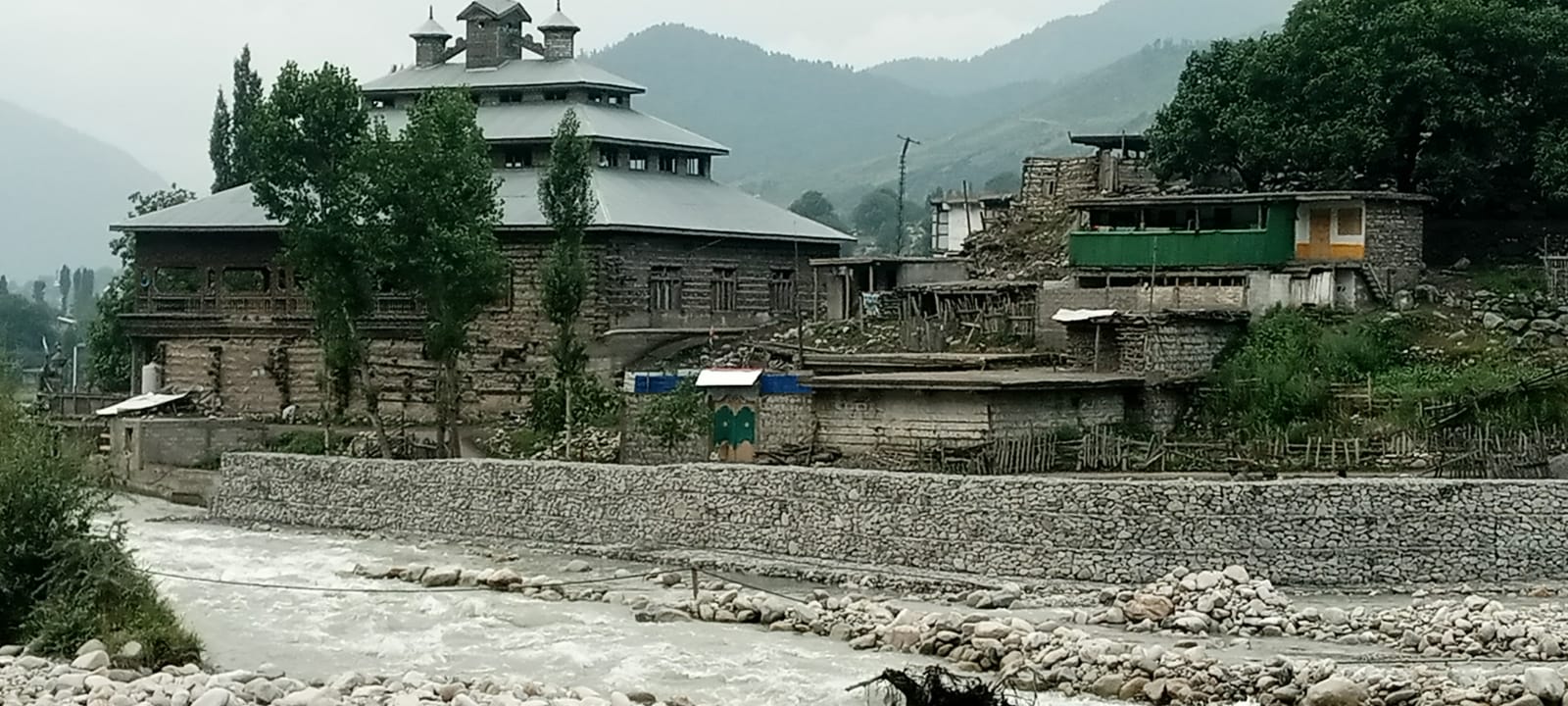
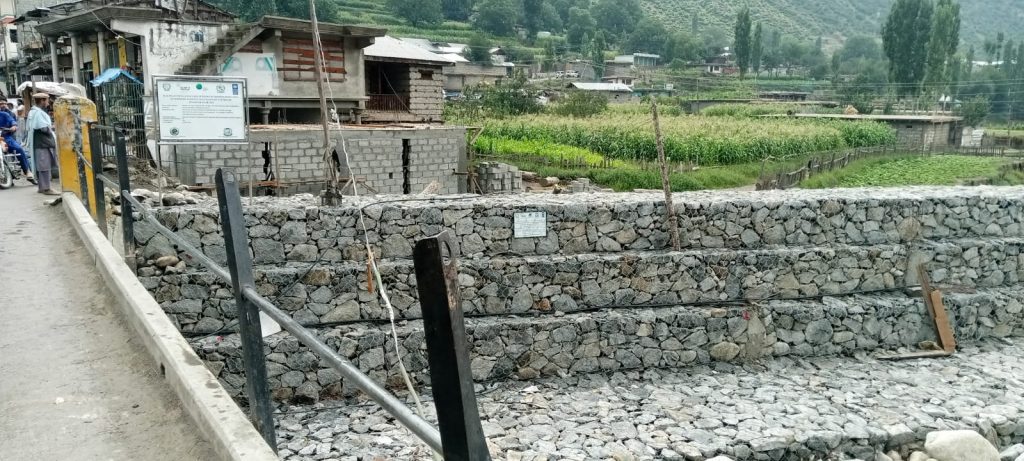
Flood protection wall secures the historic mosque in the scenic Kumrat Valley of Upper Dir district i Khyber Pakhtunkhwa, built under the UNDP's GLOF-II project.
By Raheela Bibi
PESHAWAR: In the picturesque Swat district of Khyber Pakhtunkhwa, 33-year-old Zar Sanga (name changed) gazes out over her farming land, while harvesting potatoes, grateful for the protection it received from the impending flood devastation this year. In a region home to numerous glaciers, the threat of floods is ever-present, but thanks to the Glacial Lake Outburst Flood (GLOF-II) project, Zar Sanga, who is preoccupied with feeding her six-month-old baby girl and also harvesting the crop, finds reasons to rejoice amid the challenges posed by extreme weather events linked to climate change.
Rising temperatures in Khyber Pakhtunkhwa (KP) and Gilgit-Baltistan (GB) have led to the development of over 3,044 glacial lakes, 33 of which are at risk of outburst flooding. This puts approximately 7.1 million people in these regions in harm’s way. However, the GLOF-II project, implemented by the United Nations Development Program (UNDP), is making a significant impact in reducing the risks to both life and property.
One of the key aspects of the project is its focus on the participation of women, ensuring food security, livelihoods and disaster risk management for vulnerable communities. The project has also enhanced the technical capacities of provincial government departments to incorporate climate change into their development plans, resulting in improved preparedness for flash floods and glacier melting.
Improved coordination among sub-national institutions is playing a pivotal role in reducing the risk of devastation from lake bursting events, which have plagued Pakistan in recent years, causing widespread destruction and loss. Despite Pakistan’s relatively low greenhouse gas emissions, the country is among the top nations bearing the brunt of rising temperatures, flash flooding, droughts and other intense weather events linked to climate change.
The GLOF-II project has reached significant milestones, including the procurement of 24 early warning systems, multiple baseline assessments and studies, community mobilization sessions, stakeholder workshops and consultation meetings. As a result, 100 percent of households in target valleys are better prepared to receive and respond to early warnings, thus mitigating the devastation caused by glacial lake outburst floods.
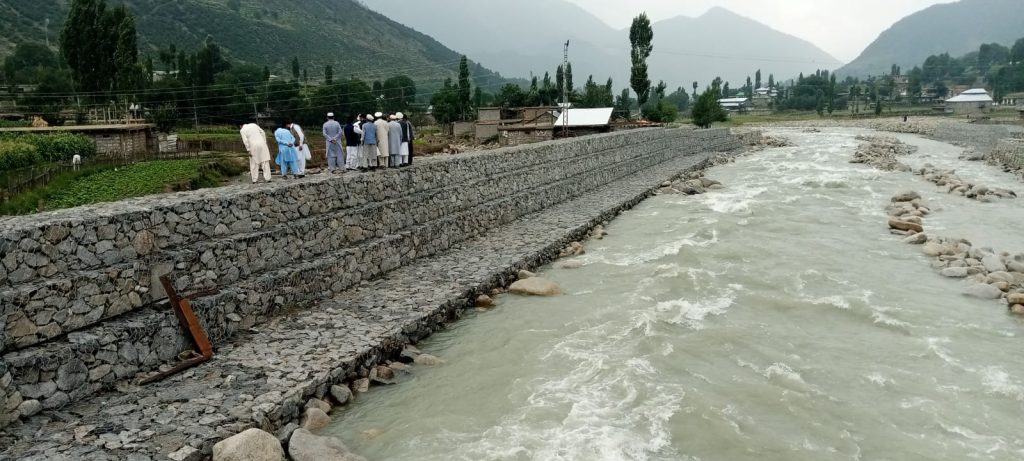
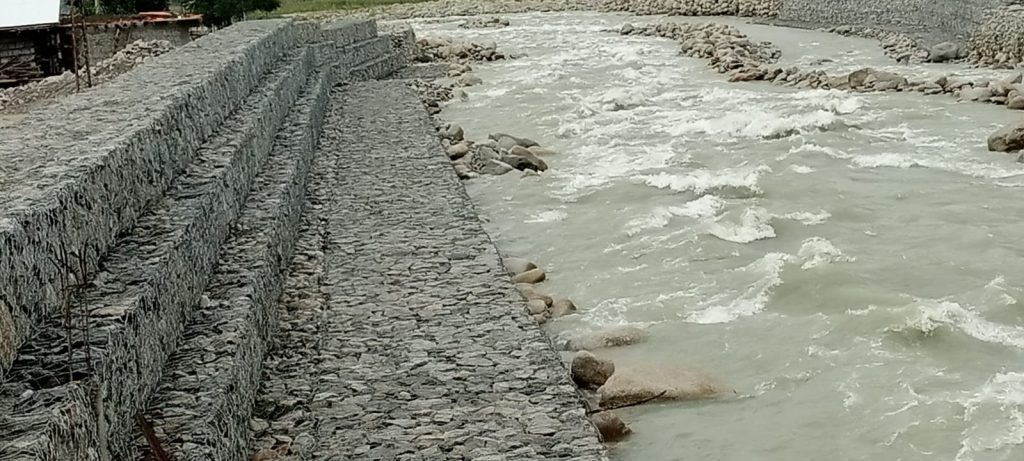
To reduce the effects of GLOF events, 250 small-scale infrastructures like gabion walls, check dams and spillways have been developed. Additionally, 50 automated weather stations and 408 river discharge sensors have been installed to collect vital meteorological and hydrological data.
In Kuramt valley of Upper Dir district of Khyber Pakhtunkhwa, the fields and buildings are protected from the flood devastation by erecting a protection wall that was inaugurated in August this year. Prior to construction of the protection wall, the local community frequently endured the damage. Such infrastructures have been mainly instrumental in saving the fields from being swept away by the river swollen by the rapid melting of glaciers and frequent heavy rains.
Innovative techniques, such as bioengineering, have made 700 hectares of land productive through slope stabilization. These efforts have not only protected human lives but also material assets, providing a sense of security to the local communities in KP and GB.
For people like Zar Sanga, the GLOF intervention represents a ray of hope for communities that have endured the devastating impacts of extreme weather events. Despite their resilience in the face of weather vagaries, the UNDP’s GLOF-II project has renewed their determination to combat the effects of climate change. As these communities continue to grapple with the challenges of a changing climate, the GLOF-II project stands as a beacon of hope, helping them to adapt, prepare and ultimately thrive in the face of adversity.
About The Author