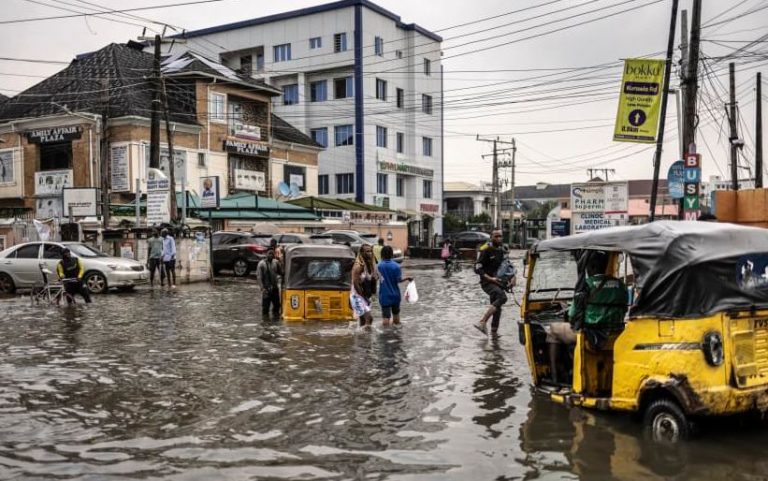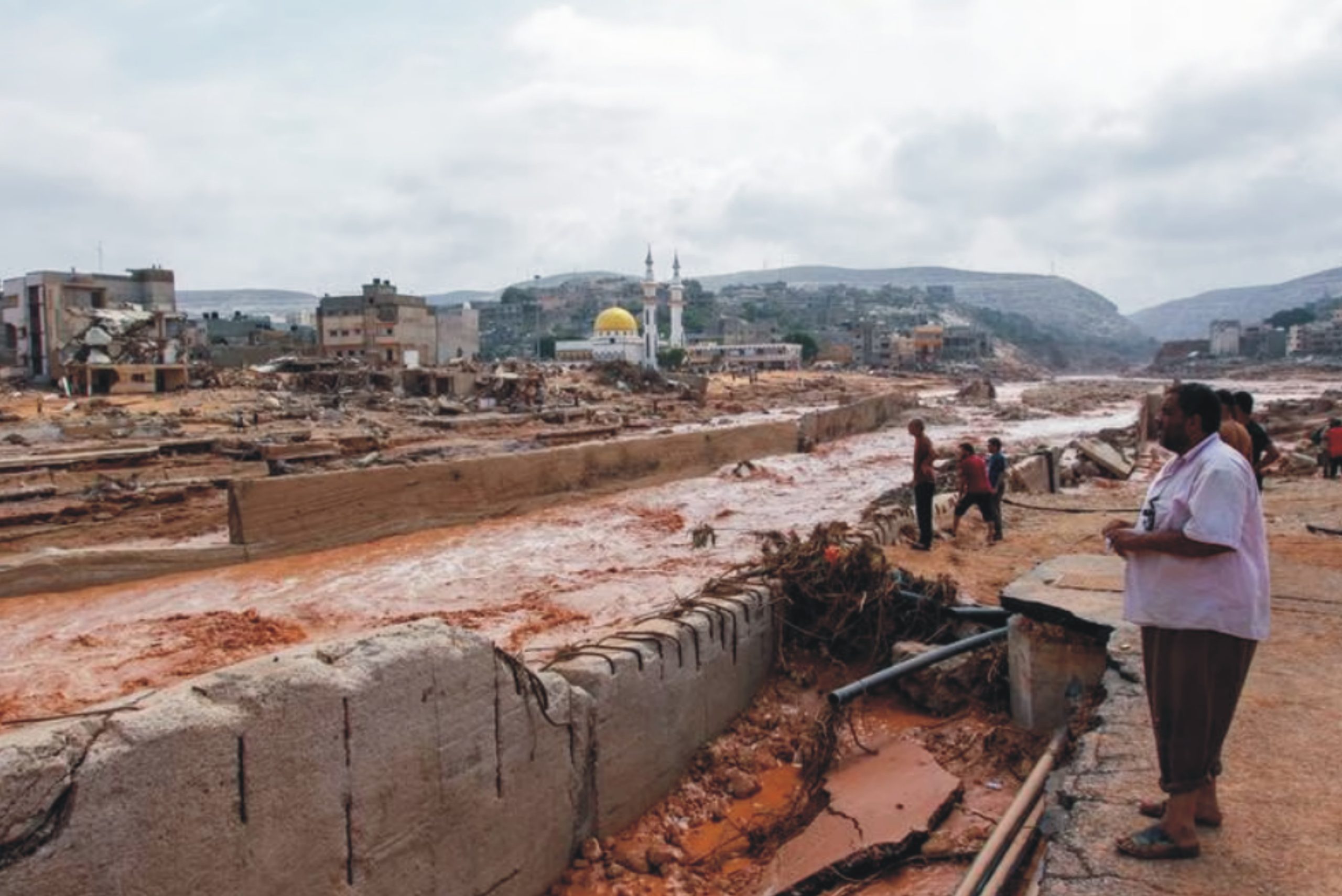
Libyan authorities said an investigation into the collapse of two dams on Sunday has begun after flooding brought about by heavy rain killed more than 11,000 people.
Osama Hamad, the acting Prime Minister head of Libya’s eastern-based government, said the city of Derna, where thousands of people drowned, may be closed to stop diseases from spreading as the bodies of the dead are recovered.
“These are precautionary measures that we have taken today and we will start implementing tomorrow, but we don’t want people to worry about that, because this is just a precautionary routine measure, out of worry for the people and their safety,” Mr Hamad said.
Residents and rescue workers in the Libyan city of Derna are struggling to cope with the thousands of bodies washing up or decaying under rubble, after floods smashed down buildings and swept people out to sea.
The World Health Organisation and aid groups urged authorities in Libya to stop burying flood victims in mass graves, saying these could cause long-term mental distress to families or create health risks if located near water.
A UN report said more than 1,000 people have so far been buried in mass graves since Libya, a nation divided by a decade of conflict and political chaos, was hit by torrential rain that caused the dams to burst.
Thousands were killed and thousands more are missing.
“Bodies are littering the streets, washing back onshore, and are buried under collapsed buildings and debris. In just two hours, one of my colleagues counted over 200 bodies on the beach near Derna,” Bilal Sablouh, International Committee of the Red Cross (ICRC) forensics manager for Africa, told a briefing in Geneva.
The UN has launched an appeal for US$71 million to assist the hundreds of thousands in need in Libya.
“We don’t know the extent of the problem,” said Martin Griffiths, UN under secretary general for Humanitarian Affairs, on Friday.
Libyan authorities reported that access to some areas has become impossible.
Mr Griffiths, who also serves as UN emergency relief co-ordinator, said that the floods, torrents and ruined buildings are concealing the extent of help needed and more deaths.
Ibrahim Al Arabi, Health Minister in Libya’s Tripoli-based western government, told Reuters he was certain groundwater was polluted by the human and animal bodies, rubbish and chemicals.
“We urge people not to approach the wells in Derna,” he said.
Mohammad Al Qabisi, head of Derna’s Wahda Hospital, said a field hospital was treating people with chronic illnesses in need of regular attention. He said there were fears waterborne diseases would spread, but no cholera as yet had been recorded
Parts of Derna, focus of the destruction in Libya’s east, were obliterated when the dams above the city broke, and the flood that swept down a dry riverbed brought down whole residential blocks as people slept.
The International Organisation for Migration mission in Libya said more than 5,000 people were presumed dead, with 3,922 deaths registered in hospitals, and more than 38,640 were displaced in the flood-stricken region.
The true death toll could be far higher, officials said.
“We should be afraid of an epidemic,” said Nouri Mohamed, 60, at a bakery where free loaves were on offer. “There are still bodies underground … Now there are corpses starting to smell.”
The UN health agency together with the ICRC and International Federation of the Red Cross and Red Crescent Societies called for burials to be managed more effectively.
“We urge authorities in communities touched by tragedy to not rush forward with mass burials or mass cremations,” Kazunobu Kojima, medical officer for biosafety and biosecurity in the WHO’s Health Emergencies Program, said.
Dozens of Syrians are missing and feared dead after Storm Daniel unleashed catastrophic flooding in Libya, the Britain-based Syrian Observatory for Human Rights said.
According to the war monitoring group, 42 Syrians have been confirmed dead in Libya while the real number could be as high as 150.
Rami Abdulrahman, who runs the observatory, said he had not been able to confirm a single survivor out of the 150 Syrians missing in Derna since Sunday night. Exact numbers are hard to confirm in the chaotic aftermath of the destruction. The victims include Syrians who were living and working in Libya long-term, and Syrian migrants who were using Libya as a transit point in efforts to reach Europe. – Web Desk / News Agencies
About The Author