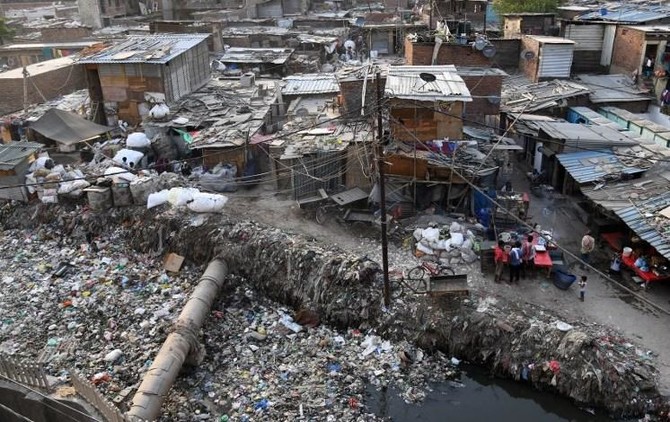
Taimur Nagar is one of many slums in Delhi and countless other Indian cities struggling to cope with waste.
When residents of a slum cluster in New Delhi’s Janta Camp area heard that the G20 Summit was to be held in the Indian capital, barely 500 metres from their homes, they expected it would benefit them as well.
Instead, they were rendered homeless.
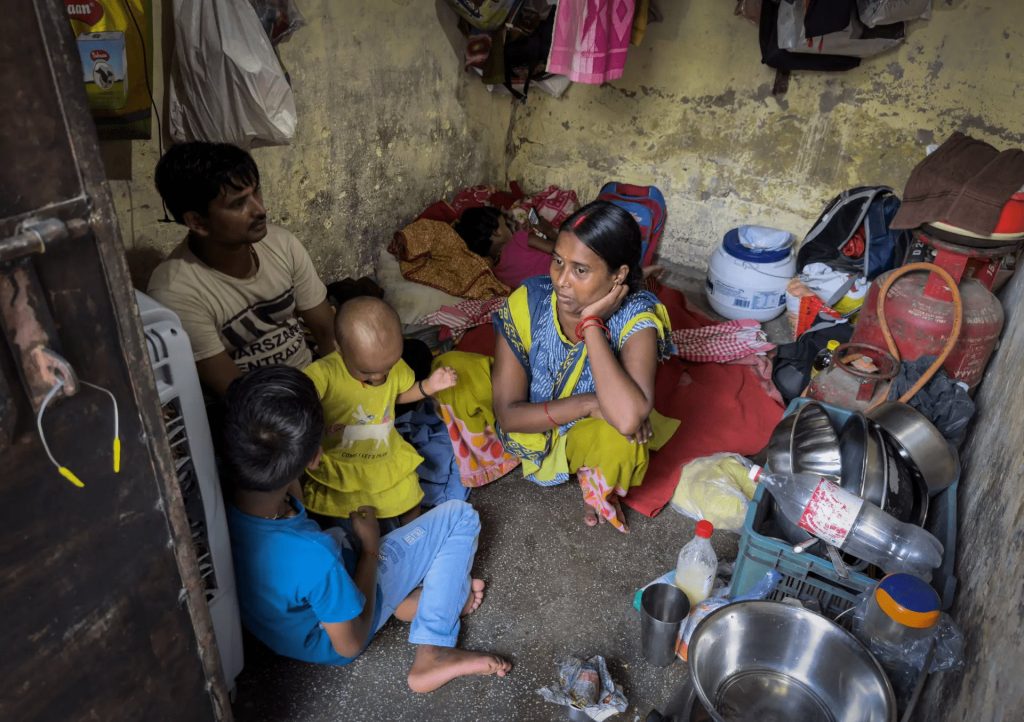
Dharmender Kumar, Khushboo Devi, and their three children were among scores of people across Delhi whose homes were demolished over the past few months – action that both residents and activists say is part of the beautification work for the September 9-10 summit.
Some of those living in the slum approached the Delhi High Court to stop the evictions but the court ruled the settlements illegal. Then city authorities ordered them to vacate by May 31.
Officials of Prime Minister Narendra Modi’s federal government, responsible for the demolitions, say the houses were built illegally on government land and their removal was “a continuous activity”.
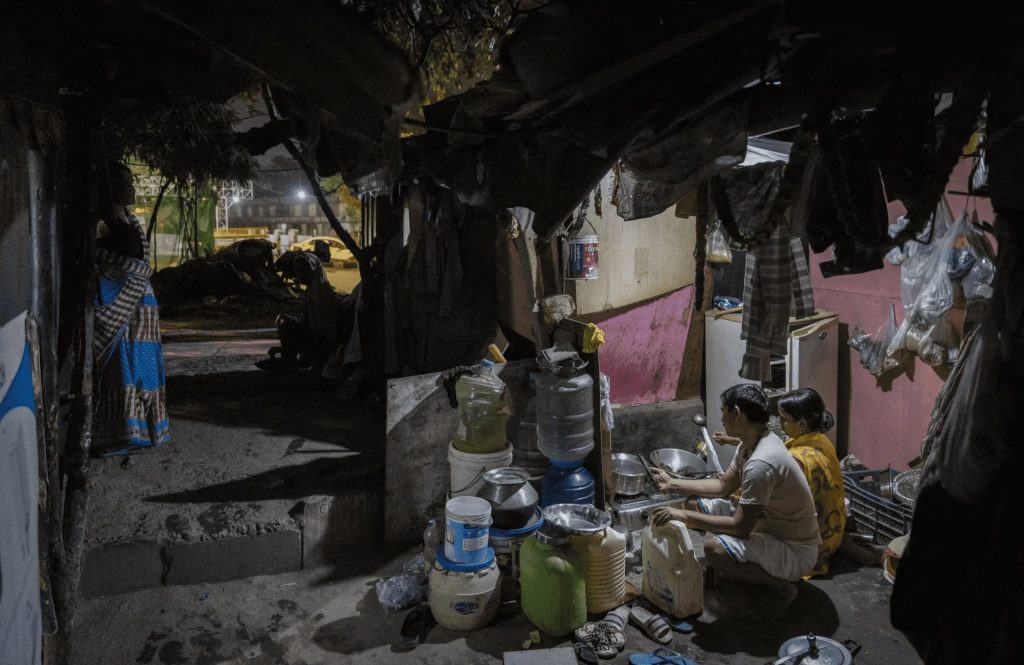
Homes in slums like the one in Janta Camp are built over years like patchwork. Most of the residents work nearby and have lived for decades within the confines of their small homes.
The demolitions started four months ago. Bulldozers rolled in on a hot May morning, with video images of the demolition showing temporary homes made of tin sheet being razed, as former residents stand watching, some of them in tears.
The camp near Pragati Maidan, the summit’s main venue, is emblematic of much of the landscape in Delhi, as many of the city’s 20 million people live in largely unplanned districts that have mushroomed over the years.
In 2021, housing minister Hardeep Singh Puritold parliament that 13.5 million people lived in the city’s unauthorized colonies in Delhi.
“The government is demolishing houses and removing vulnerable people in the name of beautification without any concern about what will happen to them,” said Sunil Kumar Aledia, executive director and founding member of the New-Delhi based Centre for Holistic Development, which works with the homeless.
“If this had to be done, residents should have been warned in time and places found where they could have been rehabilitated,” he added.
The slum sits just off the main road near Pragati Maidan.
Last month, the Supreme Court ruled that squatters have no right to occupy public land, and can at best, seek time to vacate it and apply for rehabilitation.
At least 49 demolition drives in New Delhi between April 1 and July 27 led to nearly 230 acres (93 hectares) of government land being reclaimed, the junior housing minister, Kaushal Kishore, told parliament in July.
“No house has been demolished to beautify the city for the G20 summit,” he said.
The demolition of the Janta Camp shanties was a rude shock for Mohammed Shameem, another resident, who said he thought the “big people” attending the G20 summit would “give something to the poor”.
He said, “The opposite is happening here. Big people will come, sit on our graves and eat”.
For Kumar, who works as a clerk in a Pragati Maidan office, the demolition of his home and his family’s eviction spells larger implications.
“If we relocate from here, my children’s education will also suffer,” he said. “Here they are able to study because the school is nearby.” Two of Kumar’s children – five-year-old Srishti and 10-year-old Eshant – go to a government school nearby. His younger daughter, Anokhee, is nine months old.
The family, which also includes Khushboo Devi’s father, had lived in their shanty for 13 years until being told to vacate as “the area had to be cleaned”.
As the bulldozers left after reducing their homes to rubble, Kumar and his wife began gathering up belongings strewn by the road.
Afterwards, they piled these into a three-wheeler that took them to their new accommodation – a single room located 10 km (6.21 miles)away, for which they paid a monthly rent of 2,500 rupees ($30.21).
Their daughter carefully lifted a peach-coloured dress that had been thrown to the ground, along with everything else that her parents owned, and dusted it off.
Two months later, in August, the family returned to a part of the Janta Camp area that had escaped the bulldozers, paying a higher rent of 3,500 rupees for a room. “It was difficult for my children to go to school everyday from the place we were staying in earlier,” Kumar said. “I want them to study and do well, we returned for their sake,” Kumar said. – News Agencies
About The Author