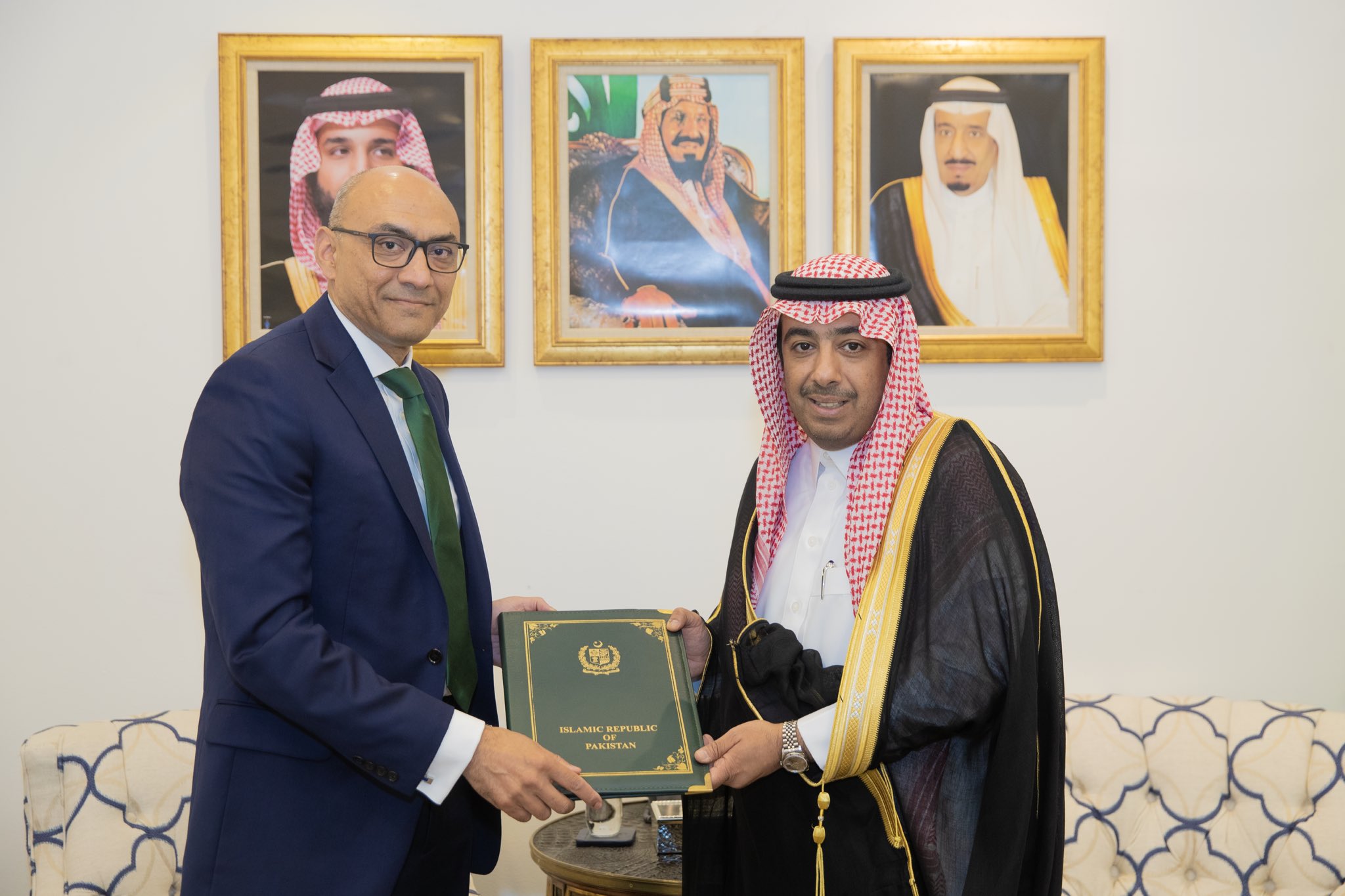
Riyadh: On behalf of the Foreign Minister HH Prince Faisal bin Farhan, the Deputy Minister for Protocol Affairs, Abdulmajeed Al-Smari receives a copy of the credentials of the designated Ambassador of Pakistan to the Kingdom, Ahmed Farooq. – Photo: Ministry of Foreign Affairs of the Kingdom of Saudi Arabia, May 23, 2023
Pakistan’s new ambassador to Saudi Arabia, Ahmed Farooq, has said he has been looking forward to building on the long-standing ties between his country and the kingdom, starting with economic collaboration.
“The relationship between Pakistan and Saudi Arabia is a very close one. It is marked by trust, by friendship,” media reports on Thursday cited Mr Farooq as saying during a visit to Jeddah, after attending the annual washing of the Kaaba in Makkah.
“It was amazing,” he said of the ceremony. “Nothing like one can imagine.”
Of the “very special” relationship between Saudi Arabia and Pakistan, Mr Farooq said there was “co-operation and connection between the leadership and the people”.
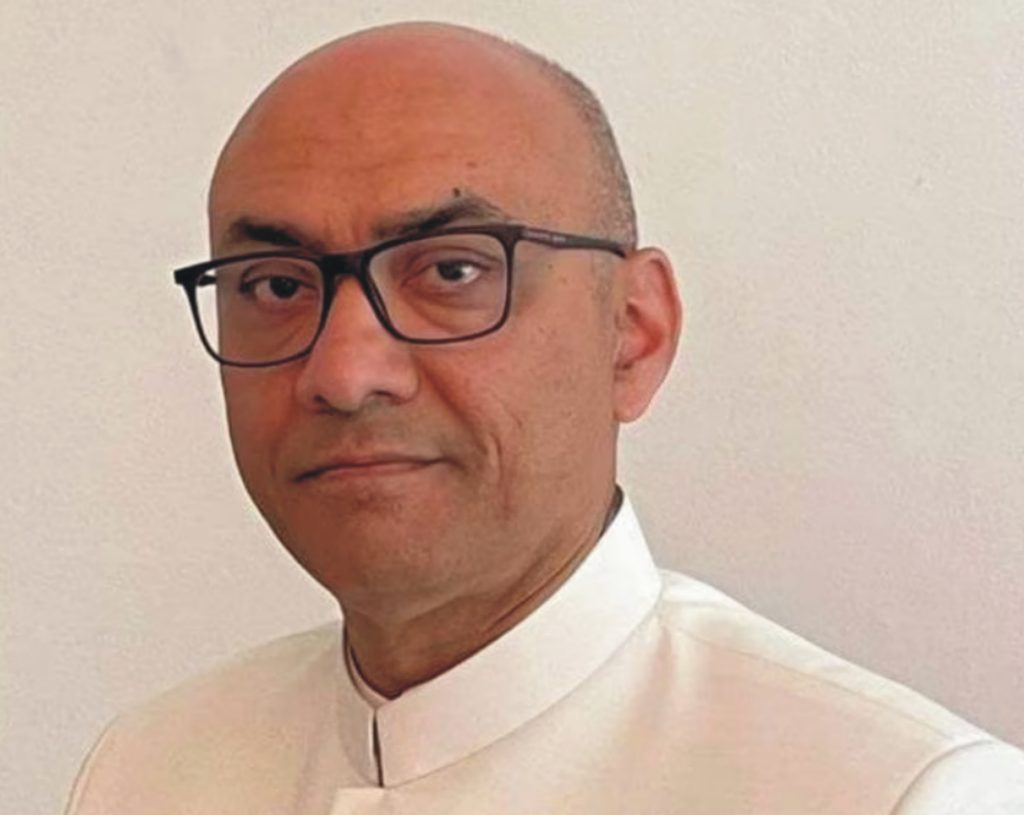
“This is one of the most important diplomatic assignments for Pakistan,” he said of his new posting.
More than 2.7 million Pakistanis live in Saudi Arabia, Mr Farooq said, and his compatriots had made a “huge contribution” to the development of the kingdom.
“We in Pakistan, everybody calls Saudi Arabia their second home,” he said. “For me right now, I would say the number one priority that we need to strengthen is the economic relationship.”
This month, the embassy in Riyadh announced that Pakistan’s exports to Saudi Arabia increased by 31 per cent to a record $563.47 million in the past fiscal year.
On Tuesday, a Saudi delegation arrived in Pakistan to discuss investment opportunities in the mining sector, aiming to explore Pakistan’s estimated $6 trillion estimated worth of mineral deposits.
Saudi Arabia is the world’s fourth-largest importer of minerals.
Mr Farooq said the proposed oil refinery at Gwadar port was the most important Saudi investment in the country.
“It’s a large investment. The project is worth anywhere from $10 billion to 14 billion,” he said. “Hopefully in a matter of a few months, we should have the final commercial contract and then we’ll move towards the construction.
“There are prospects of Saudi investment in Pakistan in several sectors. Mining is one, the oil refinery project is another.
“Agriculture is another area where we are very interested, and I think the Saudi side also is interested because through that investment it helps in improving food security in Saudi Arabia.
“So those are all areas that we need to focus on, and my goal is that we make progress on that.”
During a visit in 2019, Saudi Crown Prince Mohammed bin Salman pledged to inject $20 billion into the Pakistani economy.
This month, Saudi Arabia deposited $2 billion in Pakistan’s central bank, a day before the International Monetary Fund’s board gave final approval to $3 billion in funds to help bail out the country on a stand-by arrangement.
Mr Farooq remains hopeful about the Pakistani economy, adding that the country is acting on structural reform.
“The IMF programme also has to be backed by efforts to address the root causes which create the conditions that you have to go to the IMF,” he said.
Mr Farooq said the growing ties between Saudi Arabia and China presented many opportunities to Pakistan as their common partner.
Pakistan recently marked the 10th anniversary of the China Pakistan Economic Corridor project “that basically helps to connect China through our ports to the GCC countries”, he said.
One of the area of focus at the recent GCC and Central Asian Countries Summit in Jeddah was improving trade between the two regions and “Pakistan provides the best corridor for that trade to happen”, Mr Farooq said.
“So with China there, Saudi Arabia and other GCC members there, there are a lot of possibilities that we can pursue in the future.”
The GCC remains a “very, very important” partner as the largest Pakistani expatriate community lived in Gulf countries.
Pakistan and the GCC are close to finalising a free-trade agreement.
“Once that happens that opens a lot of doors for businesses, for trade in goods, services and also investment opportunities,” he said.
“We see a very bright future with the GCC.”
Saudi King Fahd bin Abdulaziz, right, and Crown Prince Abdullah meet Pakistan’s new military leader Gen Pervez Musharraf in October 1999 in Riyadh. Reuters
Saudi King Fahd bin Abdulaziz, right, and Crown Prince Abdullah meet Pakistan’s new military leader Gen Pervez Musharraf in October 1999 in Riyadh. Reuters
Mr Farooq said Pakistan’s military had contributed greatly to strengthening Saudi Arabia’s defence and the relationship was continuing.
“It has been a long tradition. Since 1982, our military trainers have been assisting the Saudi military – all forces, army, air force, navy – in their training requirements,” he said.
“We continue with that. There’s there is still a strong contingent of military trainers from Pakistan which are permanently stationed in Saudi Arabia.
“In the future we are also looking at opportunities on how we can collaborate in terms of meeting the equipment requirement. Some joint production in defence equipment and those things also are being considered.”
Mr Farooq said he appreciated the vision of Saudi Arabia’s leadership in the strengthening of relations among Arab states, including the recent return of Syria into the Arab League.
“You know, the steps that they have taken in recent times, especially on the foreign relations side,” he said.
“They are revolutionary and this is actually what was needed to bring peace to this region and to create an environment where there can be prosperity. “If you see Pakistan’s experience, we have been suffering from the Afghan conflict for the last 40 years and that has affected our economy, affected our development.” – Web Desk
About The Author