By Urfa Bhatti
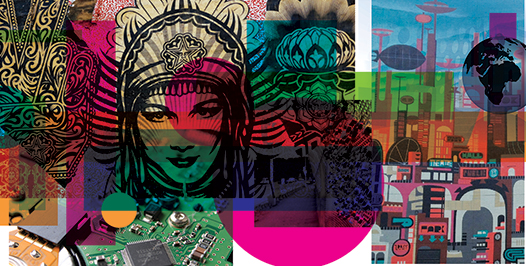
In this article, we provide a conceptual definition of the “creativity economy” and a model that connects the knowledge, innovation, and creativity economies. The creation and consumption of creative goods and services form the foundation of the economic activity known as the “creative economy.” This comprises sectors including publishing, research & development, software, computer games, electronic publishing, TV/radio, architecture, arts & crafts, design, fashion, film, video, photography, music, performing arts, and fashion.
One area of the global economy that is expanding is the creative economy. It is predicted to be valued US$2.5 trillion and represent 3% of the world’s GDP in 2020. With over 29 million people employed globally in the creative sectors, the creative economy is also a significant source of employment.
The youth population in Pakistan is sizable and expanding, and they are becoming more and more engaged in the creative industries. This demographic shift offers Pakistan the chance to build a robust creative economy that can offer chances and jobs to young people.
Now here in the province we may use its vast spectrum of creative talent and rich cultural legacy to launch new businesses and industries. The theories of Richard Florida and Charles Landry contend that a thriving creative economy can draw smart people and enterprises to the area, which can have a favorable effect on the economy as a whole.
It is crucial to understand that not all-creative work generated equally if Khyber Pakhtunkhwa is to fulfill the potential of its creative economy. In addition to having the necessary tools and resources, content creators also, need to be able to add value. This necessitates a particular standard of polish and professionalism in the work that is created. Programs for artists and other creative people to receive training and mentoring can help to ensure that the caliber of their work reaches worldwide standards.
The growth of the creative sector is supported by a strong infrastructure. Institutions that may offer formal training in a variety of creative disciplines, such as art, music, and design, can act as centers for the development of creative ability. Such institutions can be created through collaboration between the public and commercial sectors. Like Edwards College Peshawar located in KP since it establishment, it has been encouraging students to utilize their potentials in co-curricular activities such as drama, debates, sports and writing. Through performing arts like doing theater for the dramatic society and the astonishing depiction of Shakespeare’s famous plays like Macbeth and Hamlet. They not only have good upcoming actors but also has melodious singers as well. The music society in any college can built up the confidence to participate in music competitions. This not only just brings out the main lead but also give chance to the people who are working at the back to become directors story writers and letting them know more about the production line in cinematography which can give a boost to our film industry.
Khyber Pakhtunkhwa has a long history of generating performers and artists who are well- known around the world. The province has a long history of producing creative talent, from great actors like Prithivi Raj Kapoor Dilip Kumar and Shahrukh Khan to internationally known musicians like Nusrat Fateh Ali Khan and Gulzar Alam and the famous poet Faiz Ahemad Faiz. Khyber Pakhtunkhwa can continue to nurture the growth of new creative stars and contribute to the cultural and economic development of the region by promoting and supporting the development of the creative economy.
An example of it is the K-pop sector of the South Korea is one of the illustration of the power of the creative economy. K-pop has spread throughout the world and had a big impact on the South Korean economy. Millions of people around the world follow K-pop bands like EXO, BTS and BlackPink, and their music has brought in billions of dollars for the South Korean economy. Data and findings from several institutes show that South Korea is benefiting from the “BTS Effect” in terms of culture, economy, and industry. South Korea is now a leader in the worldwide entertainment business thanks to the development of the K-pop industry, which has also contributed to strengthen the nation’s overall economy.
TikTok and YouTube significantly contribute to the growth of the creative economy in Khyber Pakhtunkhwa by being a content creator. If content producers are given the right conditions, they can use this platform to display local talent and culture and connect with a worldwide audience. Khyber Pakhtunkhwa content producers can use TikTok to display local dance, music, and fashion. They can also utilize the platform to publish content that highlights the province’s scenic beauty and cultural attractions while promoting the province’s tourism business. The province can unlock the full potential of the creative economy by offering training and mentorship to content creators and building a supportive ecosystem that fosters innovation and creativity.
About The Author